


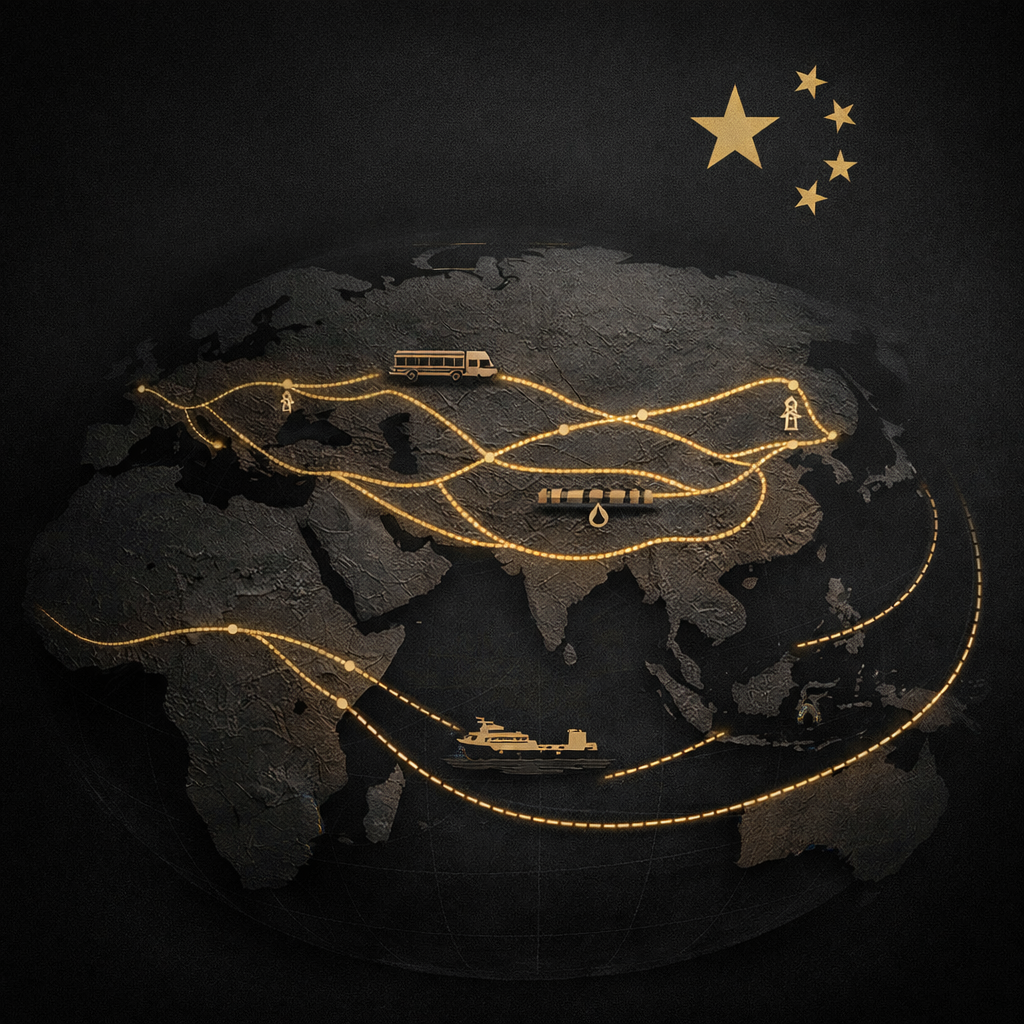
When China launched the Belt and Road Initiative (BRI) in 2013, it was often described as an ambitious vision. More than a decade later, it has become something far more tangible. Infrastructure projects now stretch across Asia, Africa, the Middle East, and Europe, linking ports, railways, energy networks, and digital infrastructure through Chinese financing and construction. Officially, the goal is connectivity and shared development. In practice, the initiative is reshaping how trade moves across continents.
- Scale: Estimated commitments exceeding $1 trillion across more than 150 participating countries
- Reach: Overland rail corridors, maritime shipping routes, digital infrastructure, and energy networks
- Intent: Strengthen supply chains, deepen economic ties, and offer an alternative to traditional Western financing models
Infrastructure as Strategy
The BRI operates across several layers. There are the physical transport routes connecting inland regions to global markets, maritime investments in strategic ports, the so-called Digital Silk Road focused on fiber networks and telecommunications, and health and medical cooperation that expanded during and after the pandemic years. Together, these projects position China as a long-term infrastructure partner, particularly in regions where financing options have historically been limited.
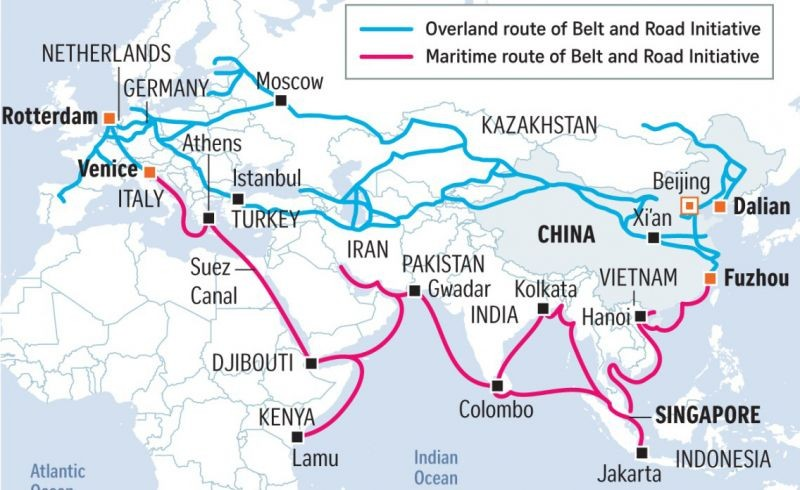
Map of China’s Belt and Road Initiative with overland and maritime trade routes linking Asia, Africa, and Europe
The initiative has not been without criticism. Concerns around transparency, debt sustainability, and political influence have followed several high-profile projects. In recent years, some investments have been renegotiated, delayed, or scaled back as borrowing costs rose globally. While the phrase “debt trap diplomacy” remains common in political debate, research more often points to a mix of local fiscal challenges, global interest rate pressure, and ambitious project planning rather than a single coordinated strategy.
Beyond the Map
What sets the BRI apart is less the individual projects than the cumulative effect. Energy corridors across Central Asia reduce dependence on maritime chokepoints. Chinese-backed port operations appear in parts of Southern Europe, West Africa, and the Middle East. New data cables and logistics hubs shorten distances between markets. Each project solves a local problem while also strengthening China’s long-term position within global trade networks.

Chinese-built road in Rwanda. Photo: Belt and Road Portal
That influence is rarely direct. It shows up in trade alignment, infrastructure standards, financing relationships, and diplomatic cooperation. For many participating countries, the appeal is pragmatic: infrastructure now, growth later. For China, the payoff is resilience: alternative routes, diversified partners, and deeper integration into emerging markets.
Meanwhile, Western economies have begun proposing their own infrastructure initiatives, but progress has been slower and more fragmented. Where policy debates often focus on sanctions, regulation, or technology standards, the BRI has largely concentrated on physical systems: ports, railways, power generation, and logistics – independent of U.S. networks.
This global competition also reflects a broader realignment between emerging and established economic blocs, something we explored in more detail in our breakdown of BRICS vs G7.
Explore more related deep dives on power, finance, and modern systems:
- New Global Power Balance
- Taiwan as a Geopolitical Chokepoint
- Realism vs Liberalism in International Relations
- How the Rothschilds Enabled Modern Finance
Geography used to be a constraint. Now it is a strategy.