

Power never stands still.
Global power has moved a great deal over the past century. The path ran from European empires to the Cold War, then through a brief unipolar moment for the United States to a multipolar world today. Wars, industry, technology, and political choices drove that shift. That record suggests what may lie ahead.
- The Past: From European empires to Cold War blocs, then America’s brief unipolar moment
- The Present: A multipolar reality led by the United States, China, and Russia
In the early 20th century, Europe ruled much of the world through empires and industry. Two world wars drained that strength, forcing decolonization and leaving the United States and Soviet Union as the new poles of power. Their rivalry spanned ideology, economic systems, and security. When the Soviet Union collapsed in 1991, the United States remained the sole superpower in the system. But its hegemony did not last. Today power is once again distributed among several major states.
The Essence of Today’s Power
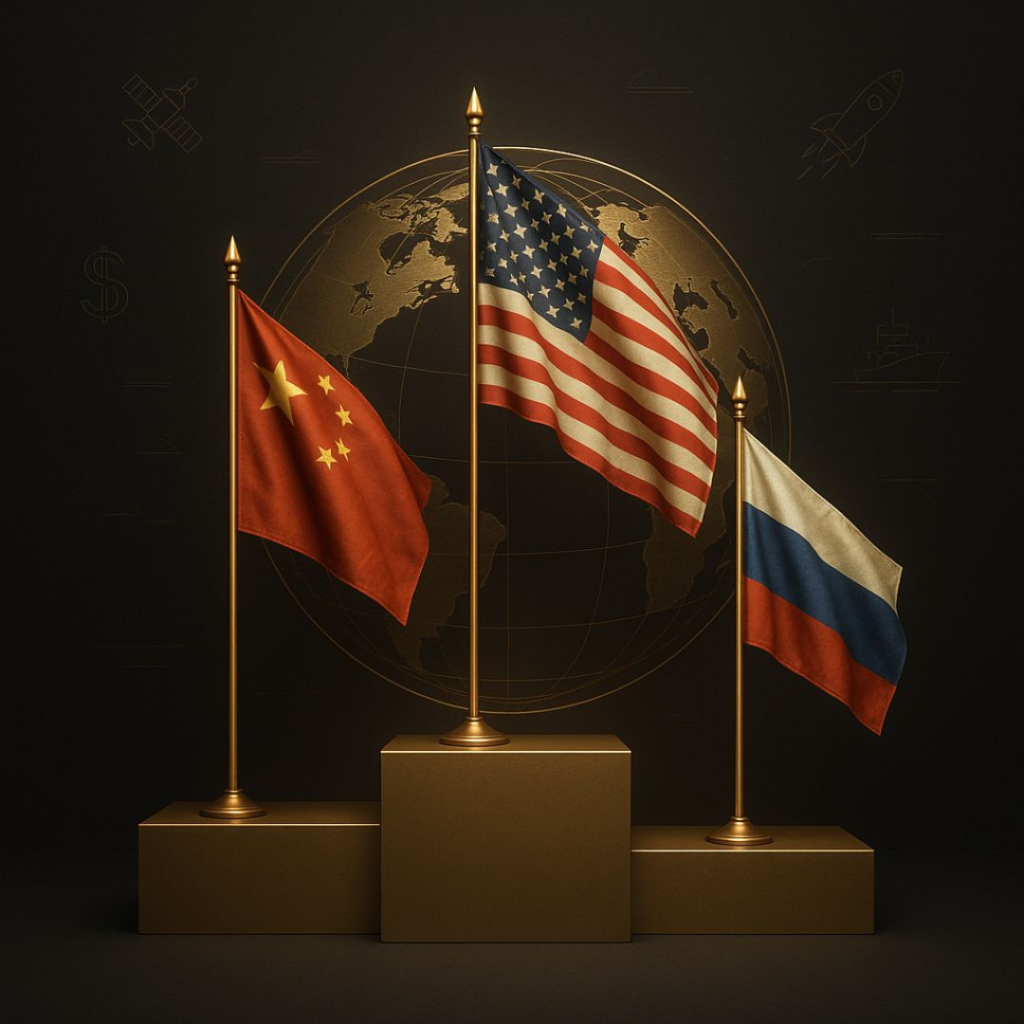
Political scientist Prof. John Mearsheimer argues that great power rests on two foundations: wealth and population, since both can be turned into military strength. Nuclear forces add a layer of deterrence, while advanced technology now determines who can project influence across borders. By these measures, three states stand out as the main poles of today’s system: the United States, China, and Russia. Their paths to power differ, but together they define the multipolar reality of the present.
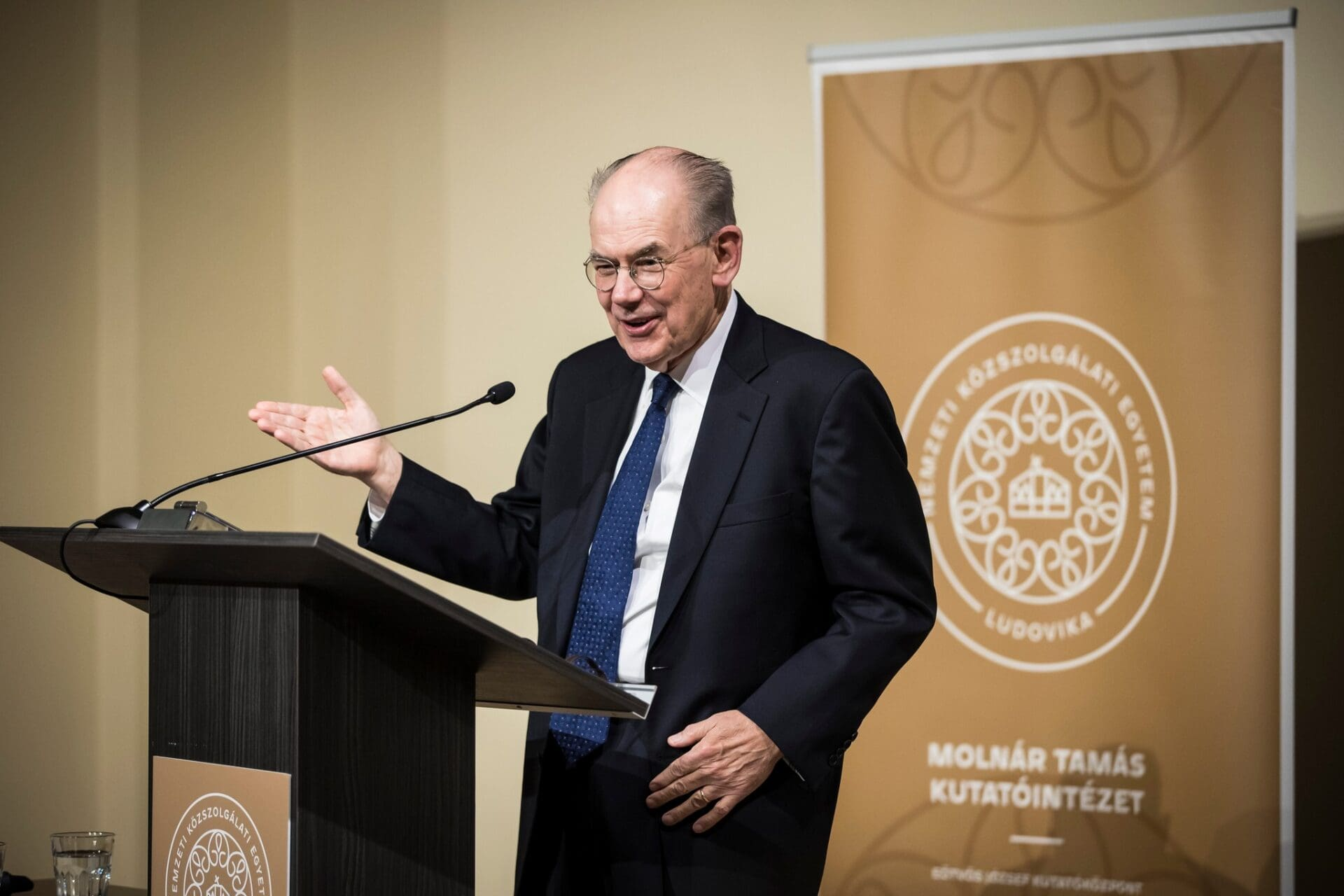
Professor John Mearsheimer giving a lecture at the National University of Public Service in Hungary
United States. The United States remains the largest and most innovative economy. Bretton Woods institutions and the dollar secured its financial reach after 1945, while investment in research and alliances reinforced its leadership. Today it still commands global military power, an advanced nuclear triad, and a network of alliances that extend across Europe, Asia, and the Middle East. Yet many allies are now treated as second tier, facing high tariffs, political pressure, and doubts about U.S. commitment. That treatment has pushed strong players such as India to hedge toward China and Russia.
China. China’s rise accelerated after its 2001 entry into the World Trade Organization, which tied its vast labor force to global markets. Export-led growth and infrastructure investment created the world’s second-largest economy. With wealth came a climb up the technology ladder, expansion of its navy, and the launch of its Belt and Road network to project influence abroad.
Russia. Russia’s resurgence drew on energy exports and military modernization, restoring leverage after the turmoil of the 1990s. Its unmatched nuclear arsenal secures deterrence, though its economy remains far smaller than those of the United States and China. Pushback against NATO enlargement and moves in Georgia, Crimea, and later Ukraine signaled that Russia would not accept a subordinate role in its security sphere.
The growing rivalry with China and Russia was acknowledged directly in the 2017 U.S. National Security Strategy, which for the first time in decades described China and Russia as direct competitors to American influence. Since then, Great-Power Competition has set the frame for global strategy.
“China and Russia challenge American power, influence, and interests, attempting to erode American security and prosperity.”
— U.S. National Security Strategy, 2017
Other countries matter, but the distinction is clear. India has scale and rapid growth, yet it has not built the military capacity to stand alongside the top tier. Several states, from nuclear-armed North Korea to technologically advanced Israel, hold regional influence. But regional leverage is not the same as driving the global order. The behavior of states within this order is often explained through the lens of realism vs liberalism.
Signals of Change
As we opened with, power never stands still. The currents are shifting: the United States faces decline, China expands, and Russia asserts itself. Great power competition is not a fantasy but a reality already tilting the order.
Ray Dalio’s study of history explains why these turns happen and what comes next. We break down his cycles in this article.
The same rule applies to nations and to people: adapt, or fall behind.