


During the Cold War, governments invested billions into satellites, surveillance systems, and advanced technologies designed to observe the world from a distance. But what if observation required no machines at all? What if the human mind itself could be used as an intelligence tool?
Remote viewing was the name given to this idea: a person would enter a focused mental state and attempt to describe a location, object, or event without being physically present or having prior knowledge of the target. The idea eventually drew the attention of intelligence agencies.
The Experiments at Stanford
In the early 1970s, physicists Russell Targ and Hal Puthoff at the Stanford Research Institute (SRI) began testing individuals who claimed unusual perceptual abilities. Early experiments involved simple targets such as drawings or distant locations selected at random. Results varied, and many sessions produced little of practical value, until the arrival of Ingo Swann.
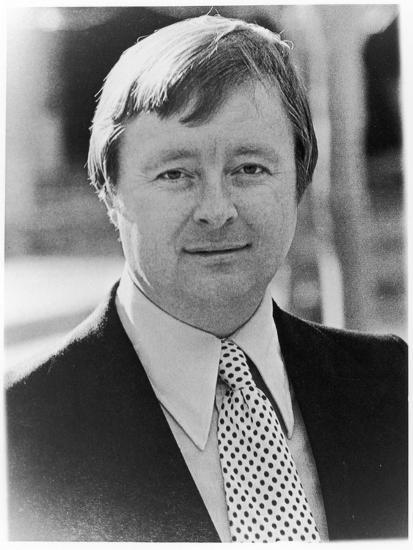
A widely discussed experiment involved a highly sensitive magnetometer housed beneath heavy shielding and concrete. The instrument was designed to detect extremely small magnetic fluctuations, such as nuclear tests. Swann was asked to focus on the device without seeing it or knowing its purpose.
Observers noted that the instrument’s readings doubled for about 30 seconds as Swann focused on it, then returned to normal once he stopped. After affecting the magnetometer, Swann drew a detailed sketch of the instrument’s internal structure, including components that had not been publicly disclosed.
Whether coincidence or not, the event drew attention beyond the laboratory.
When Intelligence Agencies Became Involved
The experiment circulated informally among scientific and defense-connected circles. At the height of Cold War tensions, the Soviet Union was also rumored to be conducting extensive research into psychic phenomena. Within that context, remote viewing shifted from a curiosity to something considered worth evaluating at a national security level.
Funding and oversight followed, eventually contributing to programs later grouped under the name Project Stargate. Remote viewers were trained to describe targets using coordinates rather than names, reducing suggestion and expectation. Sessions were recorded, compared, and evaluated for patterns of accuracy.
Over time, sessions were tasked against a range of intelligence objectives. Participants were asked to describe Soviet military installations, suspected weapons facilities, and locations in regions where satellite coverage or human intelligence was limited. Some accounts describe tasking related to the Middle East and other geopolitical hotspots, while many operational targets remain partially or fully classified.
A Presidential Account
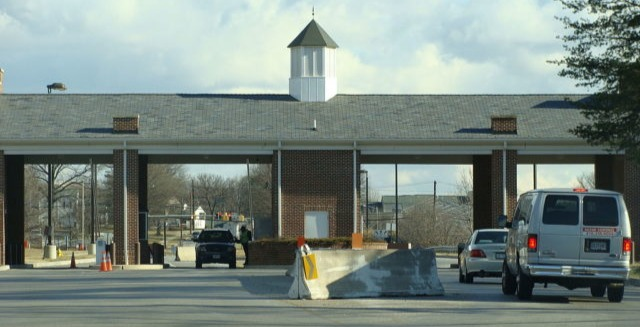
As the program expanded, remote viewing sessions had moved into operational requests. Former U.S. President Jimmy Carter recalled in a 2005 interview with GQ magazine that the CIA used a psychic to help locate a Soviet Tu-22 bomber in 1979, which had crashed somewhere in Africa.
According to Carter, U.S. intelligence services were attempting to recover sensitive Soviet codes and equipment carried by the aircraft. “The woman went into a trance and gave some latitude and longitude figures,” Carter said. “We focused our satellite cameras on that point and the plane was there.”
Remote Viewing Beyond Earth
Not all sessions remained focused on military or intelligence objectives. As the program continued, some participants explored whether remote viewing could function not only across distance, but also across time or toward locations beyond Earth itself.
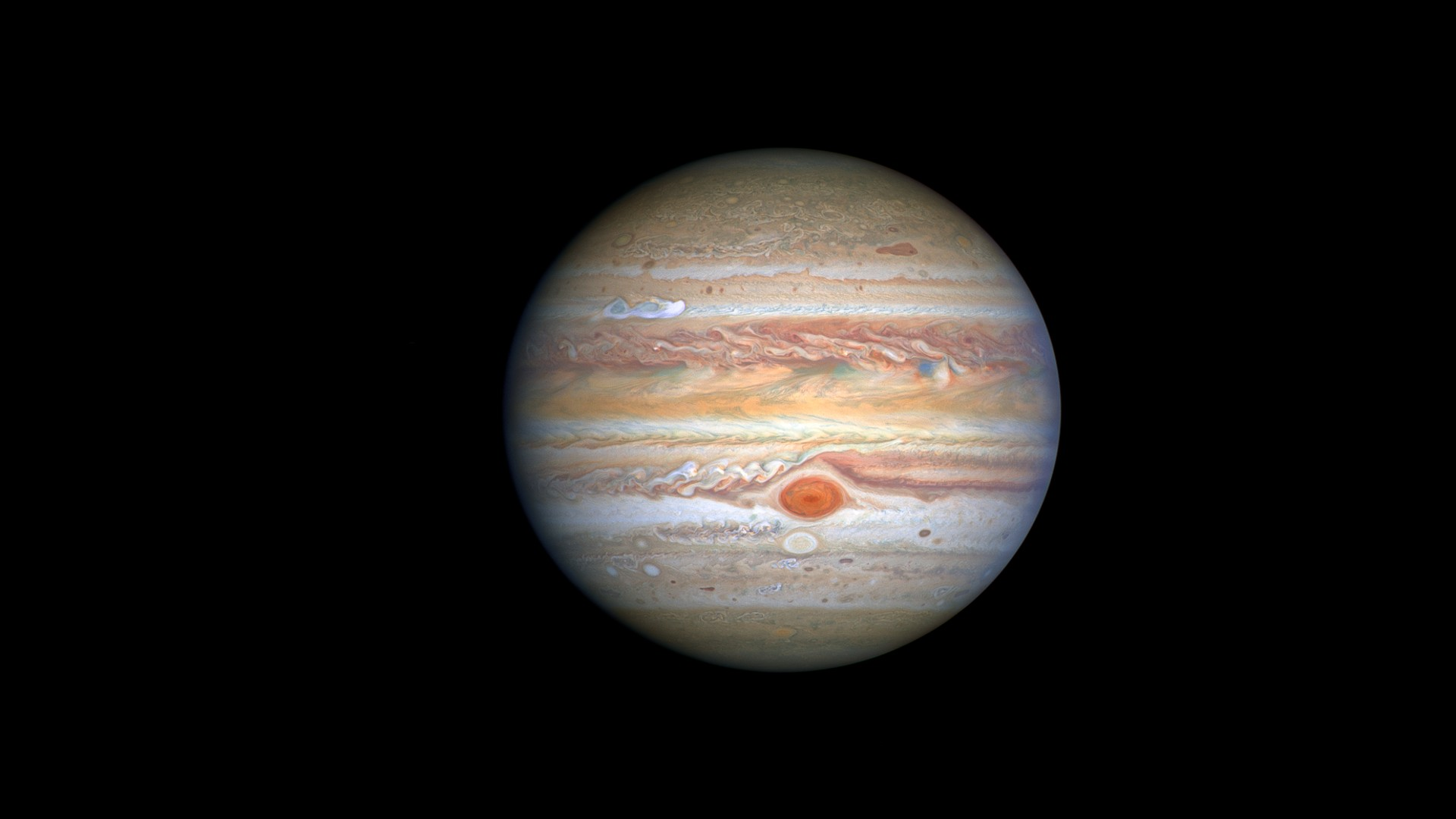
Declassified Stargate-era records show that Ingo Swann participated in sessions focused on locations beyond Earth. In 1973, he participated in a session targeting Jupiter, describing atmospheric features and a faint planetary ring years before such a ring was confirmed by spacecraft imagery.
Swann also claimed that similar sessions involving the far side of the Moon revealed artificial structures, industrial activity, and non-human presence. On Mars, he described ancient, Earth-like landscapes long ago, with humanoid beings present.
Pat Price
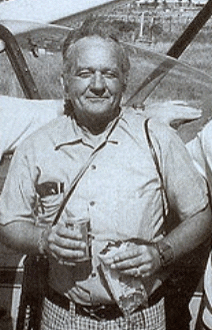
One of the most closely followed participants in the program was Pat Price, a former police commissioner from California. By this time, Price had already gained attention for assisting in criminal investigations where his descriptions matched real-world locations. When tested at SRI, researchers noted that his sessions often contained unusually concrete details, including layouts and technical features, contributing to his reputation as one of the program’s most capable remote viewers.
During one of the program’s better-known sessions, CIA analysts provided coordinates that were afterward defined as a simple “lakeside cabin.” However, Price reported a highly secured installation, complete with guards, radar arrays, and extensive infrastructure. He described interior rooms, documents, and operational details that concerned intelligence officials. The site was later verified as a secret NSA radio station intercepting telecommunications, and the session significantly increased intelligence interest in Price’s work.
The Mountain Incident
Over several coordinate-based sessions, Price mentally “entered” a secret installation within Mount Hayes, Alaska. Price reported underground structures, advanced equipment, and military personnel operating alongside “non-human” entities. The remote viewing sessions reportedly heightened his fears, as he believed he had uncovered highly classified information.
Shortly afterward, in 1975, he died suddenly at a hotel in Las Vegas at the age of 52. The official cause of death was listed as a heart attack. However, his wife said that Price told her by telephone that evening that he suddenly felt unwell after an encounter in the hotel lobby, describing a sharp sensation in his leg, as if he had been pricked by a needle. The next day, he died. By the time his family was notified, his body had already been cremated.

Later, renowned remote viewer Joe McMoneagle described similar installations in Spain (Mount Perdido), Zimbabwe (Mount Inyangani), and Australia (Mount Zeil), suggesting these locations may have been part of a larger network monitoring Earth or transmitting energy.
The Official Ending and the Unanswered Question
In the mid-1990s, the program was officially terminated and later declassified. The American Institutes for Research (AIR) was commissioned by the CIA to conduct a retrospective evaluation of the Stargate Project. According to the AIR review, “no remote viewing report ever provided actionable information for any intelligence operation.”
Yet the program had existed in various forms for more than two decades, funded and maintained during one of the most competitive intelligence periods in modern history. Joe McMoneagle was even awarded the Legion of Merit, a high military honor, for his remote viewing work, which was credited with providing crucial intelligence. Whether remote viewing belongs to the past, or only to the classified present, remains a question left open.
Explore more about history, technology, and power:
- The Pyramid That Shouldn’t Exist
- The Rothschild Era
- A Technocratic Future
- Truth as an Instrument of Power
- The PayPal Mafia
Fit and Free is about staying sovereign in a world that isn’t.