



Change the pipes of global money and you change who gets paid, how fast, and on what terms.
Global finance is moving toward a multipolar payments system where no single network controls every route. SWIFT, CHIPS, SPFS, CIPS, and mBridge each play a different role: some carry messages, some settle trillions of dollars, and one is a testbed for central bank digital currencies. Together they show how money flows are being redesigned as finance, technology, and geopolitics push in different directions.
- Overview: SWIFT is messaging; CHIPS, T2 and CHAPS are settlement; CLS controls FX risk; SPFS and CIPS are alternatives; mBridge tests CBDC settlement.
- Trend: a shift toward a multipolar payments system with more local currency settlement and more digital rails for speed and control, not an overnight end to the dollar system.
First, the Pipes You Already Use
SWIFT moves structured messages between banks. It does not move money. Settlement happens on systems like CHIPS for large dollar payments, the eurozone T2, and the UK CHAPS. CLS settles both legs of a foreign exchange trade at the same time to reduce settlement risk. Scale is huge. CHIPS clears about a trillion plus dollars per day, T2 moves roughly two trillion euros per day, and CLS settles several trillion dollars of FX each day.
Why New Rails Are Being Built
Three forces are at work. Efficiency: the G20 wants cross border payments that are cheaper and faster by 2027, and the industry is moving to ISO 20022, a richer data standard that reduces manual fixes. Compliance: banks face strict AML, KYC, and sanctions screening, so any new rail must fit those controls. Geopolitics: countries want options if access to dollar channels is restricted, and some want more trade in their own currency.
Meet SPFS and CIPS
SPFS is Russia’s SWIFT alternative. It carries messages inside Russia and with a limited set of foreign banks. It is shaped by sanctions. The European Union forbids EU operators outside Russia from connecting to SPFS or similar Russian services, and United States guidance flags SPFS for sanctions evasion risk. That limits foreign uptake and raises compliance work for any bank considering it.
CIPS is China’s cross border renminbi clearing and settlement system. Think of it as a purpose built RMB rail that can work with or without SWIFT messages. Volumes have grown steadily. In 2024 CIPS processed about 175 trillion yuan, and participation keeps expanding in 2025. Growth aligns with more trade invoiced in RMB, especially within Asia and with energy exporters.
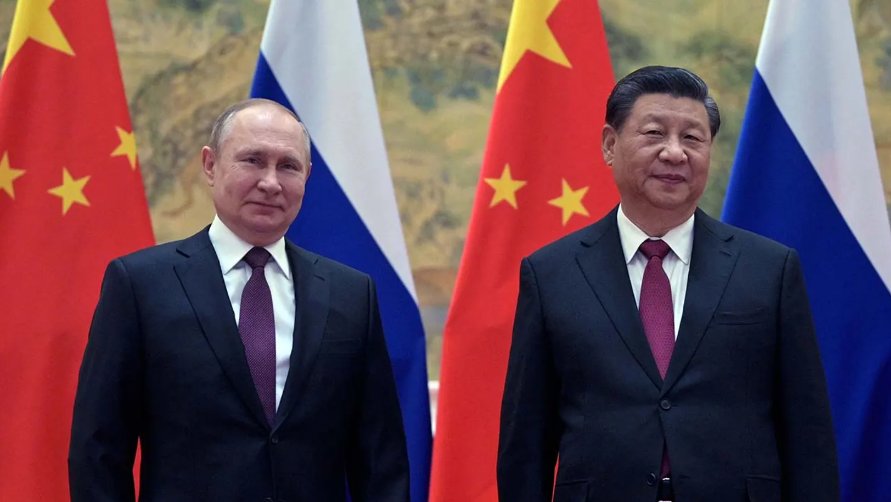
Russian President Vladimir Putin and Chinese President Xi Jinping during their meeting in Beijing, February 4, 2022 (Photo: Alexei Druzhinin/Sputnik/AFP via Getty Images)
mBridge
mBridge is different. It is a multi central bank digital currency platform for wholesale cross border settlement. In plain words, mBridge is a shared ledger where central banks issue tokenized balances to selected banks so payments can settle in seconds across borders. It reached a minimum viable product in 2024 and continues pilots with more observers. It is not a BRICS project and it is not live at scale yet. The test is whether central bank money on a ledger can cut cost and risk in international flows.
This is where digital currencies enter the conversation.
CBDC and Stablecoins
A CBDC is digital central bank money. mBridge is testing the wholesale version for banks, like a faster and programmable form of today’s settlement cash.
A stablecoin is a digital token built to hold a steady value, usually one to one with a major currency. In practice it delivers CBDC-like features such as instant transfer and round the clock settlement, but it is a private issuer claim backed by reserves rather than central bank money. Stablecoins already move significant value on public chains with low network fees.
De-Dollarization or Just More Choice
More choice is real. RMB usage in global bank payments sits around the low single digits in mid 2025. The dollar still dominates foreign exchange trading and a large share of SWIFT payments. That does not mean nothing is changing. On the margin, more trade is getting invoiced and settled in local currencies where it makes sense.
For the roots of dollar dominance, see Bretton Woods.
What Changes for Banks and Companies
Working capital: near instant cross border settlement reduces daylight overdrafts and the cash buffers you need to park. That lowers funding costs at the margin.
Fees and delays: a typical corporate cross border payment can cost tens of dollars once bank fees and FX spreads are included. Cleaner data under ISO 20022 and new rails aim to cut exceptions and rejects so fewer payments get stuck and fewer people need to touch them.
Compliance: controls do not go away on new rails. Banks still need KYC, AML, and sanctions screening. For SPFS in particular, EU rules restrict connections, and United States guidance warns on sanctions risk. Many banks will avoid rails that add regulatory exposure even if they look cheaper on paper.
Signals to Watch
- RMB share in global payments and trade finance. A steady increase shows that China’s payment system (CIPS) and yuan-based invoicing are gaining real traction.
- mBridge pilots that settle actual commercial transactions, rather than demos.
- Clear policies on stablecoins. When regulators clarify the rules, banks can hold and use digital cash safely, moving from testing to real-world use.
- Interoperability matters more than consolidation. Expect different payment systems to connect through gateways and currency bridges, rather than being absorbed into a single system.
A primer on blockchains, stablecoins, and everything crypto