


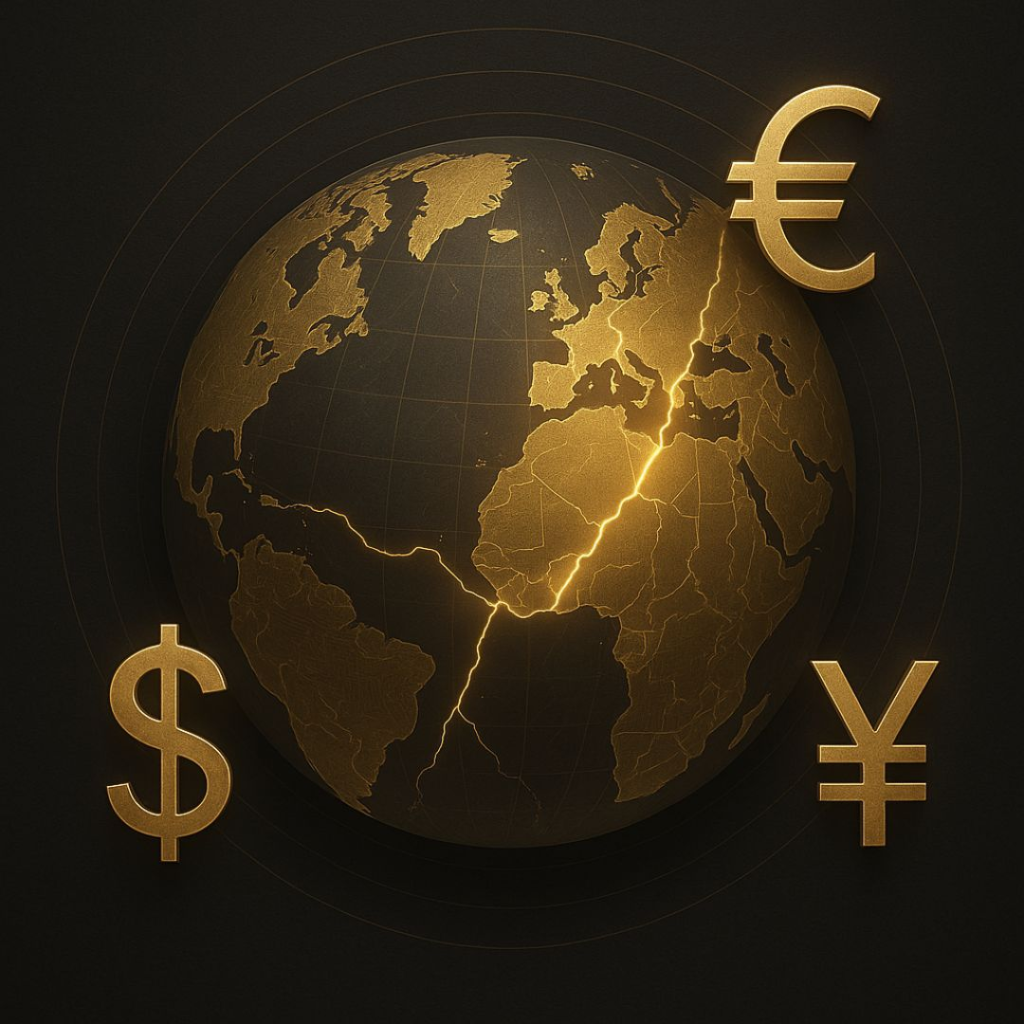
Global debt reached $324 trillion in early 2025. That equals more than $40,000 for every person on Earth.
Debt runs through every part of the economy. Governments borrow to cover budget gaps. Companies borrow to expand or survive downturns. Households borrow to buy homes, cars, or simply to manage rising living costs. As the totals grow, so do the risks. The nature of this debt, its growth, and its implications define the bigger financial picture.
- What it is: The combined debt of governments, companies, and households worldwide
- How it grew: Since 1971, money has not been tied to gold, making it easier for governments to issue debt; each crisis added more
- Why it matters: Higher interest rates make it harder for countries, firms, and families to keep paying what they owe
The Building Blocks of Global Debt
Debt is simply a promise to repay borrowed money, usually with interest. On a global scale, it has three main parts: public debt (governments), corporate debt (businesses), and household debt (families). Added together, these exceeded $324 trillion in early 2025, according to data reported by Reuters.
Did you know? Global debt is now more than three times the size of the entire world economy. For every dollar of goods and services produced, there are over three dollars of debt.
How We Got Here
After World War II, many major economies operated under the Bretton Woods system. Currencies were linked to the U.S. dollar, and the dollar was linked to gold. This limited how much money governments could create and, by extension, how much debt they could issue.
In 1971, the United States ended the dollar’s link to gold. From that point on, most major currencies became “fiat money,” backed by government authority rather than a physical commodity. This change made it easier for countries to borrow in their own currencies. Over time, each major crisis added another layer of debt: oil shocks in the 1970s, financial crises in Asia and Latin America, the 2008 global crash, and the pandemic. Borrowing became the standard response to emergencies.
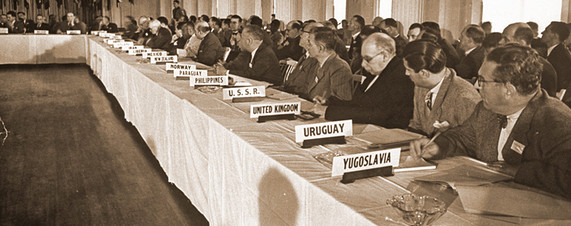
Delegates at the 1944 Bretton Woods Conference, New Hampshire. Photo: Time & Life Pictures/Getty Images
Who Holds the Debt
In advanced economies, most government debt is held domestically by banks, pension funds, insurers, mutual funds, and central banks. In many developing countries, a larger share is owed to foreign investors or international lenders, which can make them more vulnerable to global financial shocks.
Economists often measure public debt using the debt-to-GDP ratio, which compares debt to the size of a country’s economy. While there is no universal danger line, levels far above 60% have historically raised concerns about sustainability.
| Country | Debt | Debt to GDP |
|---|---|---|
| United States | $37T | 124% |
| China | $18T | 88% |
| Japan | $8.8T | 237% |
| France | $3.6T | 113% |
| Italy | $3.3T | 135% |
Source: Trading Economics
Governments regularly refinance old debt by issuing new bonds. When central banks raise interest rates to fight inflation, refinancing becomes more expensive. That leaves less room for public investment or social programs. Companies face similar pressure as higher borrowing costs reduce profits and limit expansion.
Households feel it most directly: mortgage payments rise, credit card bills grow, and financing options like Buy Now Pay Later plans stack up. U.S. household debt has crossed $18 trillion, with credit card balances up over 50% since 2021. Taken together, government, corporate, and household debt in the U.S. is nearing $70 trillion, which is around a quarter of global debt.
What Could Happen Next
There is no single breaking point where debt automatically triggers collapse. Outcomes depend on growth, inflation, and interest rates. If economies expand and incomes rise, debt becomes easier to manage. If growth slows while rates remain high, repayment burdens increase.
Governments also face long-term obligations: aging populations require pensions and healthcare, infrastructure needs repair, and defense spending is rising in many regions. Some countries may choose austerity, cutting spending to stabilize finances. Others may rely on keeping interest rates below inflation for extended periods, gradually reducing the real value of debt. That approach can ease government burdens, but households see their savings erode.
Explore more related deep dives on how finance, systems, and power:
- You Will Own Nothing And Keep Paying
- Ray Dalio on the Current Decline and How to Prepare
- How the Rothschilds Enabled Modern Finance
- The Logic of the Petrodollar
When trust in traditional money systems weakens, alternatives matter.