

Taiwan’s strategic importance did not begin with semiconductors or today’s rivalry between Washington and Beijing. It grew out of a series of wars, territorial transfers, and power calculations across the 20th century that continue to impact global stability.
From Imperial Frontier to Wartime Transfer
Before the 20th century, Taiwan was administered by the Qing Dynasty. Its strategic value lay in its geography. Control of the island meant influence over the shipping lanes linking Japan, Southeast Asia, and the Chinese coast.
In 1895, China lost Taiwan to Japan after its defeat in the First Sino-Japanese War. Japan ruled the island for the next 50 years, until its surrender at the end of World War II, after which Taiwan was transferred back to the Republic of China in 1945.
A Civil War Frozen by Geography
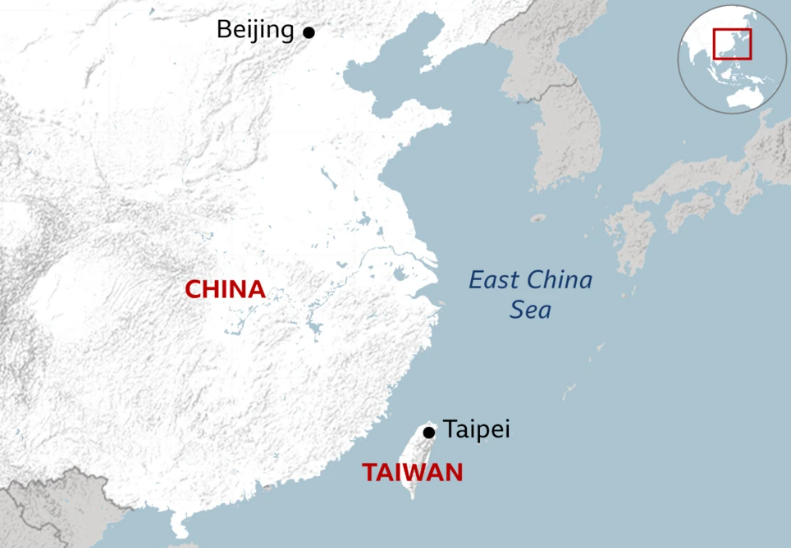
Only a few years later, China entered the final phase of its civil war. By the late 1940s, Mao Zedong’s communist forces were driving the Republic of China government south and east, until its leadership and remaining forces fled across the Taiwan Strait. The communists could not follow. They lacked the naval and air power needed to cross the water. Geography ended the war without resolving it.
The Korean War Changes Everything
At first, the United States planned to stay out. Washington viewed the conflict as a Chinese civil matter and focused on rebuilding Europe. That restraint ended in 1950, when communist North Korea invaded the South with Soviet approval and Chinese consent.
President Truman reversed course. American forces went to Korea, and a U.S. naval fleet moved to Taiwan to block a communist invasion. To justify this shift, Washington introduced a concept that still defines the issue today: Taiwan’s legal status was described as unresolved. This ambiguity allowed the United States to defend the island without formally recognizing it as a sovereign state.
Taiwan at the Center of Cold War Containment
As the Cold War hardened, the U.S. built a defensive arc of bases across the Pacific, with Taiwan at its core. Nuclear weapons were deployed. Artillery duels flared across nearby islands for decades, never intended to seize territory but to signal resolve. This logic mirrors broader power dynamics explored in realist theories of international relations, where survival and signaling often outweigh ideology. Over time, Taiwan also changed internally, evolving from an authoritarian refuge into a self-governing society with its own political identity.
Rapprochement Without Resolution
By the late 1960s, China and the Soviet Union had turned against each other, opening the door to a major shift in U.S. policy. The Nixon administration sought closer ties with Beijing to isolate Moscow, and Taiwan quickly became the central bargaining issue.
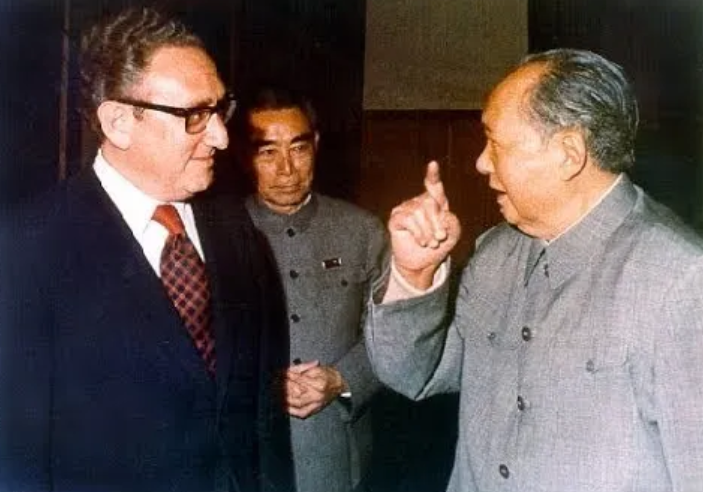
In private talks, American leaders acknowledged that Beijing viewed Taiwan as part of China. Publicly, Washington remained vague. This careful language allowed diplomatic normalization without forcing a final answer. When the United States formally recognized the People’s Republic of China in the late 1970s, it withdrew its troops and ended its defense treaty with Taiwan, but stopped short of abandoning it entirely.
Strategic Ambiguity Becomes Policy
Congress responded by passing legislation that preserved ambiguity. The U.S. would sell weapons to Taiwan and retain the capacity to intervene, without promising that it would do so. In practice, this meant keeping both Beijing and Taipei uncertain enough to avoid forcing a decision. The balance was designed to deter Beijing from invasion while discouraging Taipei from declaring formal independence.
Political scientist Prof. John Mearsheimer argues that Taiwan’s importance lies less in sentiment than in credibility. If the United States were seen as abandoning Taiwan, allies across East Asia would begin to question American security guarantees. Japan, South Korea, the Philippines, and Australia all rely on U.S. deterrence. Losing Taiwan would weaken the entire alliance structure intended to contain China’s rise.

Professor John Mearsheimer giving a lecture at the National University of Public Service in Hungary
Chips Turn Taiwan Into a Geopolitical Chokepoint
Taiwan’s final transformation was economic and technological. By specializing in advanced semiconductor manufacturing, the island embedded itself at the heart of the global economy. Today, it produces the vast majority of the world’s most advanced chips. Control of this capacity shapes leadership in artificial intelligence, cyber power, and modern weapons systems, as explored in the global chip race.
This industrial concentration gives Taiwan leverage but also raises the cost of conflict. A war over the island would disrupt supply chains that underpin global growth, advanced militaries, and emerging technologies. In this way, Taiwan’s fate is tied to broader struggles over resources and industrial power, similar to the dynamics described in rare earth competition.
The Logic of Power
Taiwan sits between unresolved history and modern power politics. For Beijing, control of the island would extend its reach deep into the western Pacific. For Washington, Taiwan underpins regional credibility, technological leadership, and efforts to contain China. For the rest of the world, it is a single point where trade, security, and identity converge.
Explore more deep dives connected to AI, chips, and the systems behind our technological future:
- AI, AGI, CGI Made Clear
- The AI Bubble
- A Technocratic Future
- The Promise and Threat of Quantum Computing
Power at the state level mirrors power at the personal level. Reclaim physical and mental autonomy in a system that works against it.