

The word “Orwellian” is widely used to describe systems that feel authoritarian. In many cases, it is applied without close familiarity with Nineteen Eighty-Four itself. Orwell’s novel is less concerned with a particular ideology than with a recurring pattern in the exercise of power: the shift from persuasion toward the conditioning of belief.
Why Orwell Wrote 1984
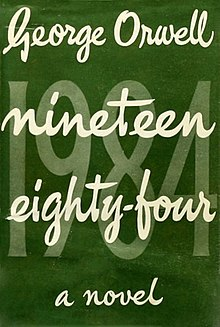
George Orwell published Nineteen Eighty-Four in 1949, after living through world war, propaganda campaigns, censorship, and the rise of totalitarian states. He described the novel as a satire, but one grounded in political and social tendencies he had already observed. The book reflects a fear that modern societies could be structured around continuous management of information, language, and belief, rather than occasional acts of repression.
The world of the novel is locked in perpetual conflict, governed by a ruling Party that claims absolute authority over truth itself.
The Machinery of Control
In Oceania, the superstate Orwell describes, control rests on three interlocking mechanisms. First is surveillance. Citizens live under constant observation through telescreens, microphones, and informants. Privacy is structurally impossible. Second is punishment. The Thought Police do not respond only to actions, but to deviations in expression, emotion, or belief. Even an incorrect facial expression can be a crime.
The third and most important mechanism is narrative control. The Ministry of Truth does not merely censor information, but rewrites it. Newspapers are altered, records destroyed, and people erased from history entirely. The past is continuously rebuilt to match the Party’s current claims.
“He who controls the past controls the future. He who controls the present controls the past.” — Nineteen Eighty-Four
Truth as an Instrument of Power
What makes 1984 distinct is that surveillance alone does not achieve the Party’s objective. Winston Smith, the novel’s protagonist, works as a low-level bureaucrat in the Ministry of Truth. Winston is not broken simply by being watched. He is broken because he is forced to accept contradictions as truth. The Party demands belief. When Winston is made to accept that two plus two equals five, the point is not mathematics, but obedience at the level of perception.
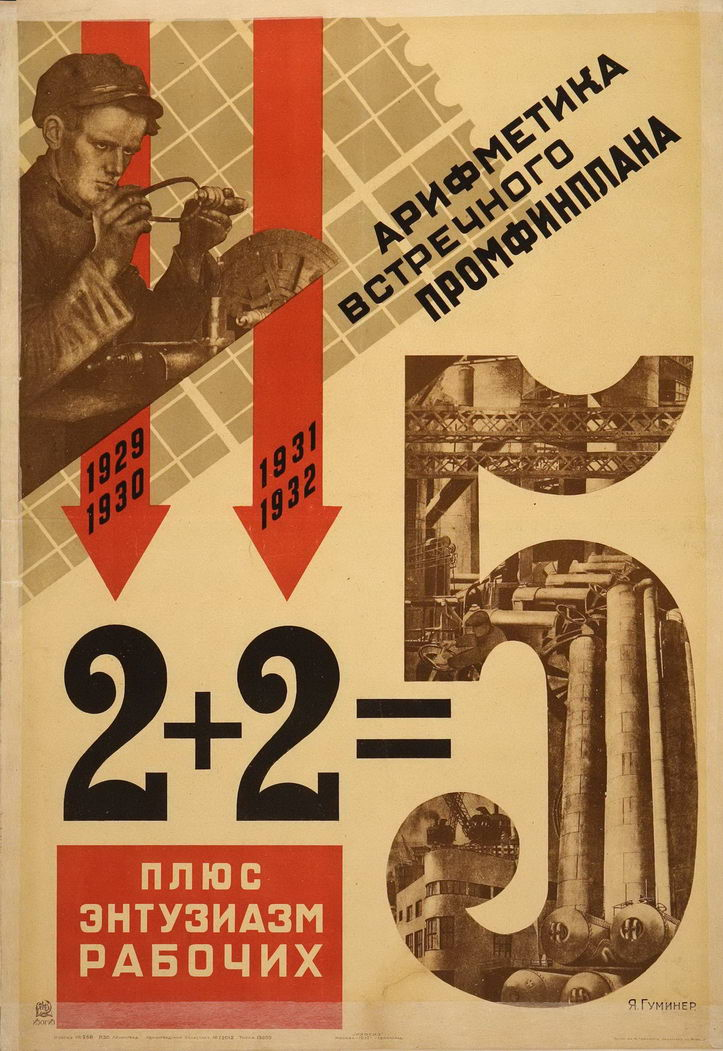
This concept is captured by Orwell’s term “doublethink,” the ability to hold two contradictory ideas at once and accept both as true. Doublethink allows a system to change its claims without ever admitting error.
“Reality becomes whatever authority declares in the moment.” — Stijn McAdam
Orwell’s concern was ultimately about who holds the authority to define reality. We examined similar questions in modern discussions of information warfare, where influence over what people accept as true has become a strategic form of power.
Language and the Limits of Thought
Newspeak is one of Orwell’s most misunderstood ideas. Rather than functioning as conventional propaganda, it works by subtraction. Words are removed from the language entirely, narrowing the range of ideas that can be expressed. As vocabulary contracts, so does the space for thought. Concepts such as dissent, injustice, or freedom become harder to articulate, and eventually harder to conceive.
Orwell understood that language does more than transmit information. It provides the framework through which people organize reality. Control language, and you begin to control the boundaries of thought itself.
How “Orwellian” Is Used
The term “Orwellian” is best understood as a pattern rather than a specific policy or tool. It appears when authority treats truth as a matter of loyalty rather than evidence, when records are endlessly revised, contradictions normalized, and language narrowed to eliminate dissent. Over time, people learn to censor themselves not because they are told to, but because doing so feels safer.
Orwell wrote 1984 as an examination of how certain systems behave when left unchecked. The value of the novel is not in spotting exact parallels, but in recognizing the underlying logic. What remains is a question about how easily such systems can rise without resistance.
Explore more related deep dives on power, information, and modern systems:
- New Global Power Balance
- Technocracy and the Future of Governance
- Realism vs Liberalism in International Relations
- The PayPal Mafia and Its Power Behind Silicon Valley
Fit and Free focuses on what you can still govern yourself.