

In the late 1800s, electricity was rare. Many streets were dark at night. Homes used gas lamps, oil, or candles. Power systems were small, unstable, and limited to local areas. Most of the world had no electricity at all. This was the world that Nikola Tesla tried to redesign.
Working Before the System Existed
Tesla was born in 1856 in Smiljan, in what is now Croatia. He studied engineering and physics and worked with electrical machines in Europe. At the time, electricity was moving out of laboratories and into cities, but engineers were still learning how to build reliable systems at scale.
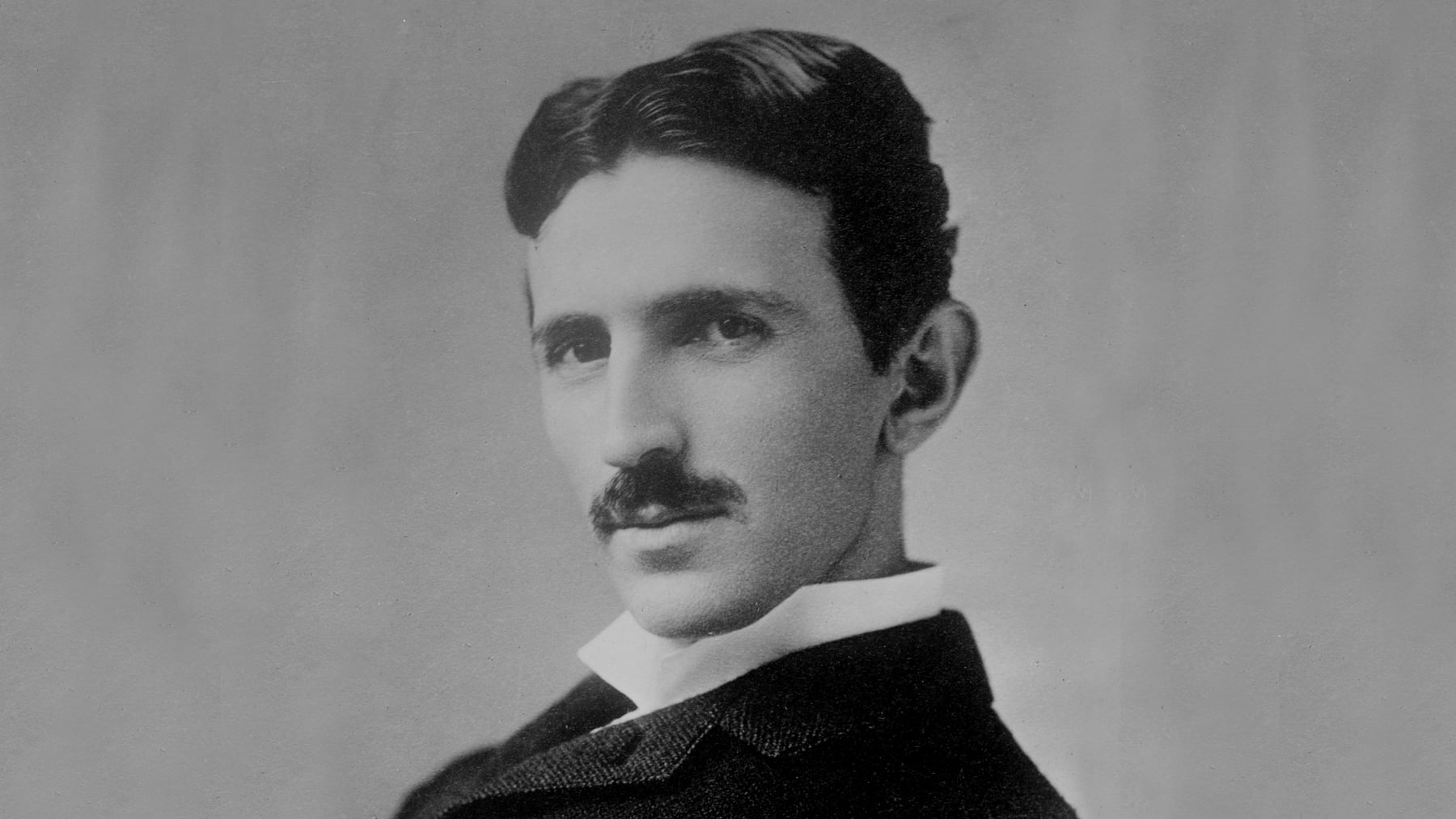
In 1884, at the age of 28, Tesla traveled to New York. He went there because the city was becoming a testing ground for large-scale electrical power. In his own words, invention existed to reduce the effort required to live and work. From this starting point, he began questioning how energy should be produced, shared, and controlled.
War of the Currents
Soon after arriving, Tesla worked for Thomas Edison. He was assigned to improve the efficiency of direct current (DC) generators. Tesla later claimed he was promised a large bonus for the work, and that when the improvements were completed, the promise was dismissed as a joke. Tesla left the company soon after.
“I don’t care that they stole my idea. I care that they don’t have any of their own.”
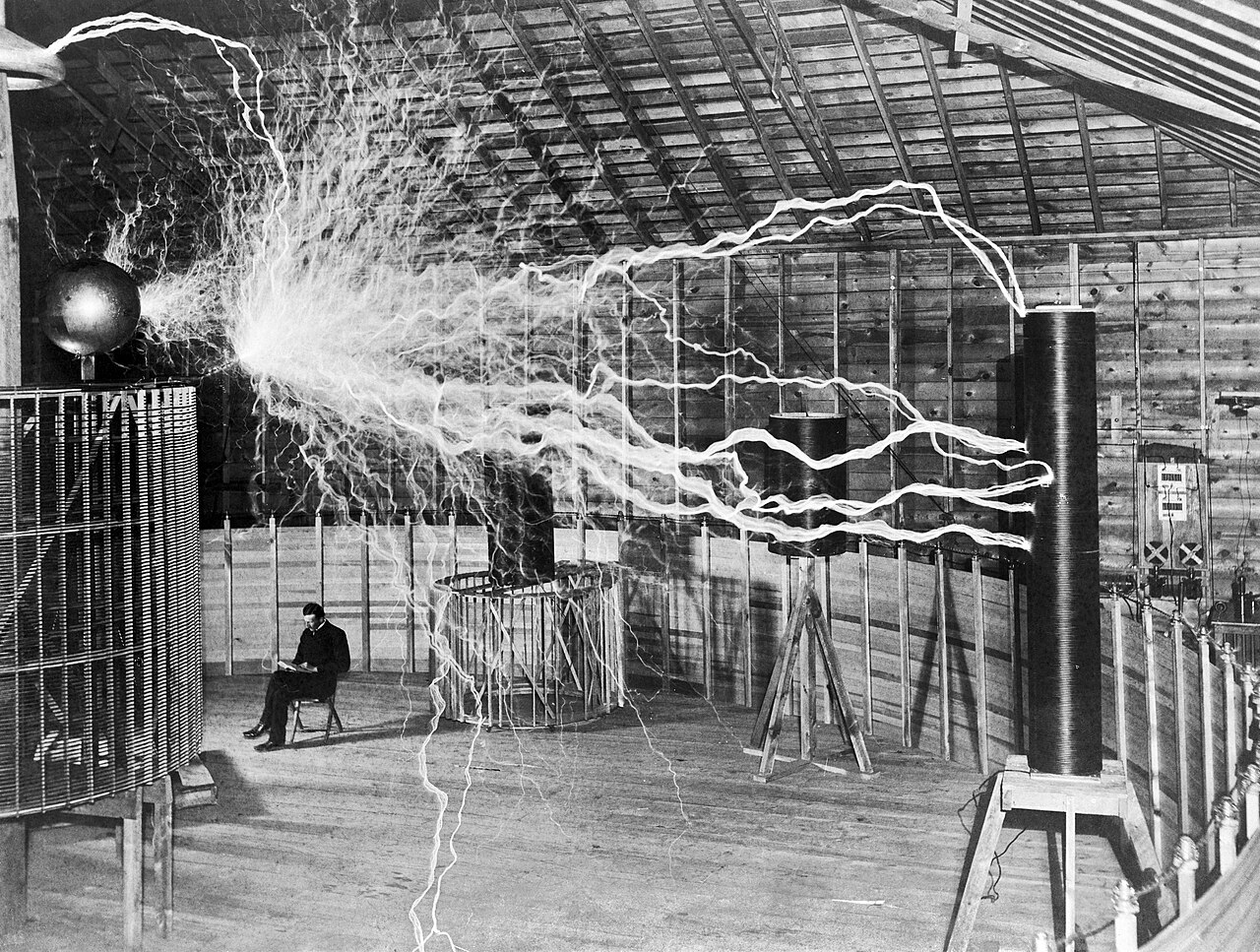
The split came just before the War of the Currents. Edison pushed DC systems that fit existing business models but could not transmit power efficiently over long distances. Tesla developed alternating current (AC) systems that could scale across cities and regions. With support from George Westinghouse, his approach won. Modern power grids are still built on it today.
A Mind That Refused Limits
As AC spread, Tesla’s thinking moved further ahead. He began to question the structure itself. Instead of wires running everywhere, he imagined energy delivered through the ground and the air. He saw the Earth as part of the system, capable of carrying electrical signals and power across distance. Fascinated by the Great Pyramids of Egypt, he believed their proportions and placement reflected an understanding of how energy might interact with the Earth itself, an idea explored further in our analysis of the pyramids and energy theories surrounding them.
To Tesla, energy was something already present, not something that had to be generated and sold.
“My brain is only a receiver. In the universe there is a core from which we obtain knowledge, strength, and inspiration. I know that it exists.”
Tesla’s quote describes how he worked. He often claimed he could design complete machines in his mind, test them mentally, and only then build them. This made him fast and precise, but it also made him a poor fit for investors who wanted plans, timelines, and guarantees.
Wardenclyffe and the Control Problem
The energy industry depends on ownership. Plants can be owned. Wires can be measured. Usage can be billed. Tesla’s ideas did not fit into this structure. If energy could be accessed anywhere, who controls it?
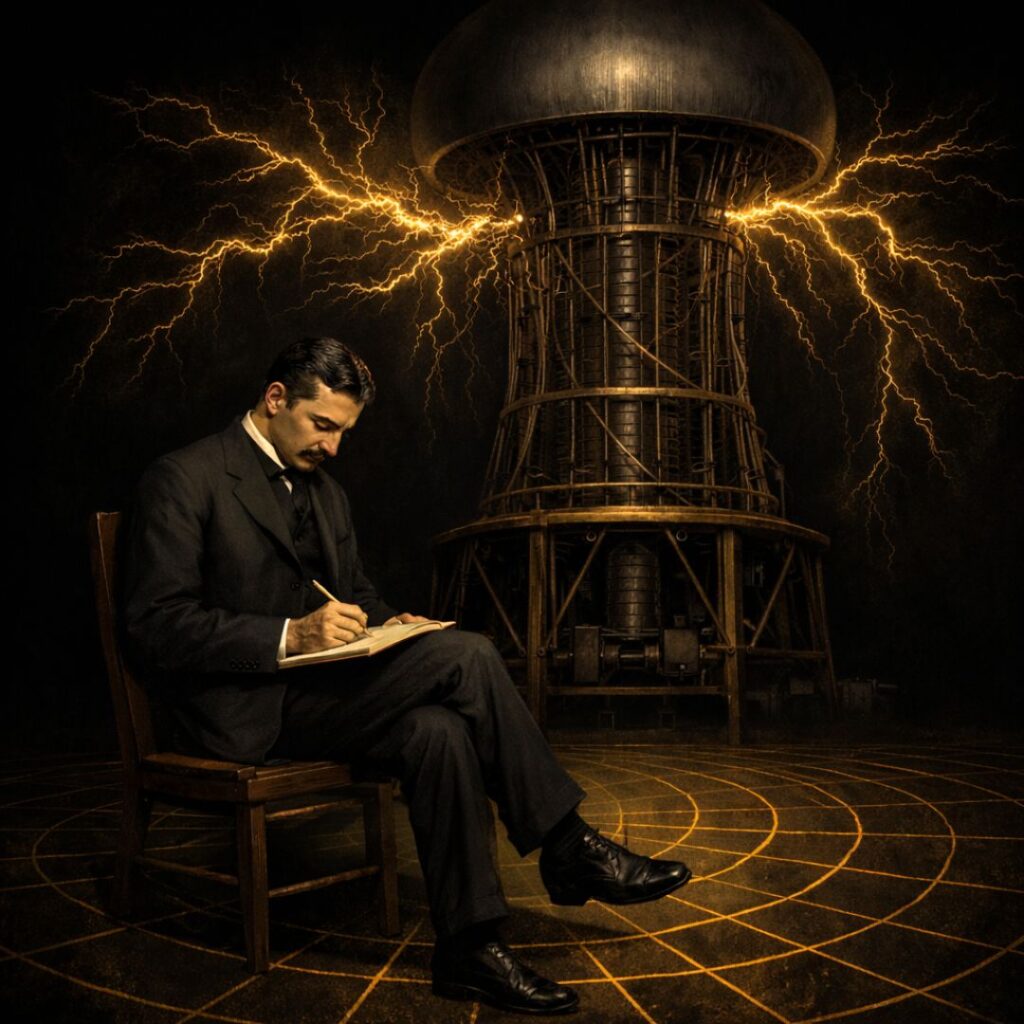
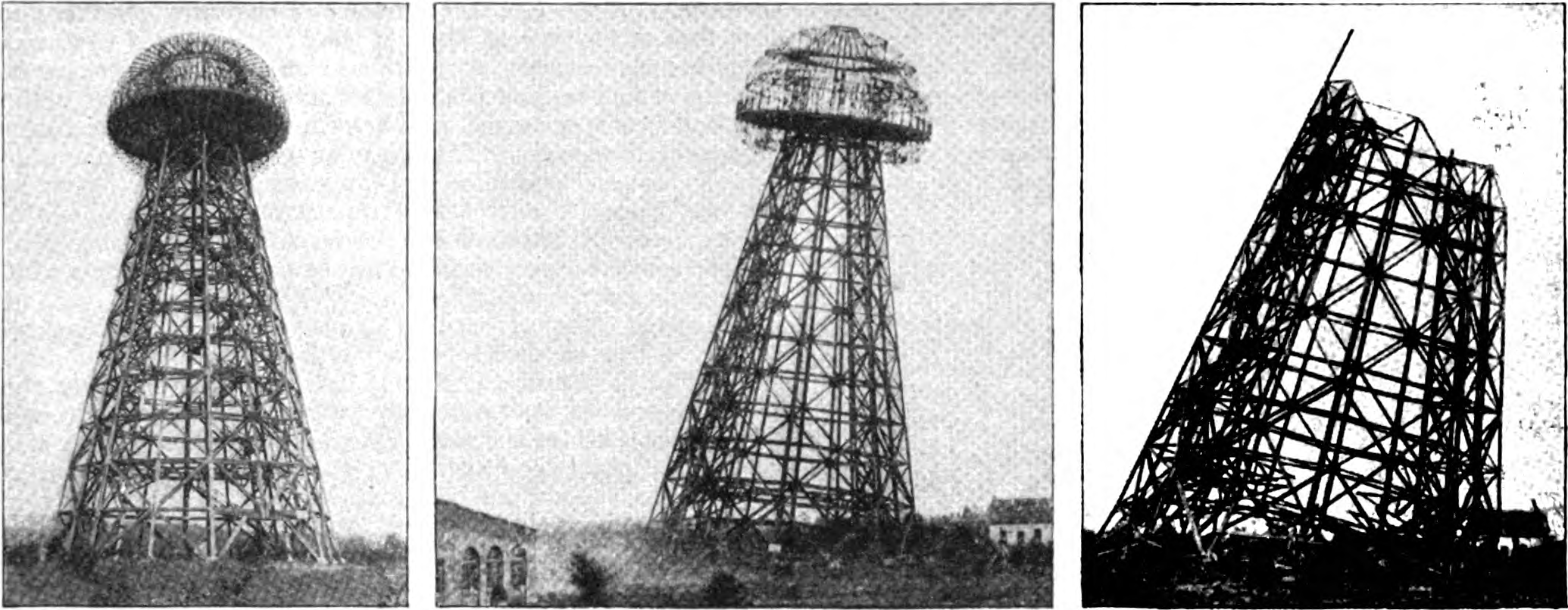
Tesla’s Wardenclyffe Tower offers a clear example. It was built to demonstrate long-distance wireless communication, including messages to ships and across the Atlantic. Financier J.P. Morgan provided the initial funding on that basis, but as radio technology advanced elsewhere, Tesla changed course. He believed only a far more powerful station could prove his deeper claim that the Earth itself could transmit signals and, eventually, power.
That expansion demanded more money and time than the original plan, but it also raised a different problem. J.P. Morgan’s financial interests extended across the electrical economy itself, including General Electric, AT&T, copper mines producing wire, rubber plantations supplying insulation, steel mills manufacturing generators, timber operations providing poles, coal mines fueling power plants, and railroads transporting these materials. Much of that infrastructure, and the business model behind it, would cease to be necessary if Tesla’s vision proved workable.
Additional funding did not come, and Tesla was effectively sidelined from the industry. Debts increased, progress slowed, and in 1917, the tower was demolished.
The Cost of Not Fitting
Tesla never stopped thinking. What failed was the match between his ideas and the world forming around him. He wanted systems that worked everywhere. Industry wanted products that could be controlled, priced, and sold. Late in life, Tesla was poor, isolated, and dismissed as impractical.
“All these years that I had spent in the service of mankind brought me nothing but insults and humiliation.” — Tesla’s last letter to his mother
Tesla died in 1943. After his death, the U.S. government secured his belongings and technical notes. The material was reviewed by John G. Trump, an electrical engineering professor at MIT and the uncle of future U.S. president Donald Trump.
Explore more related deep dives on technology, information, and power: