


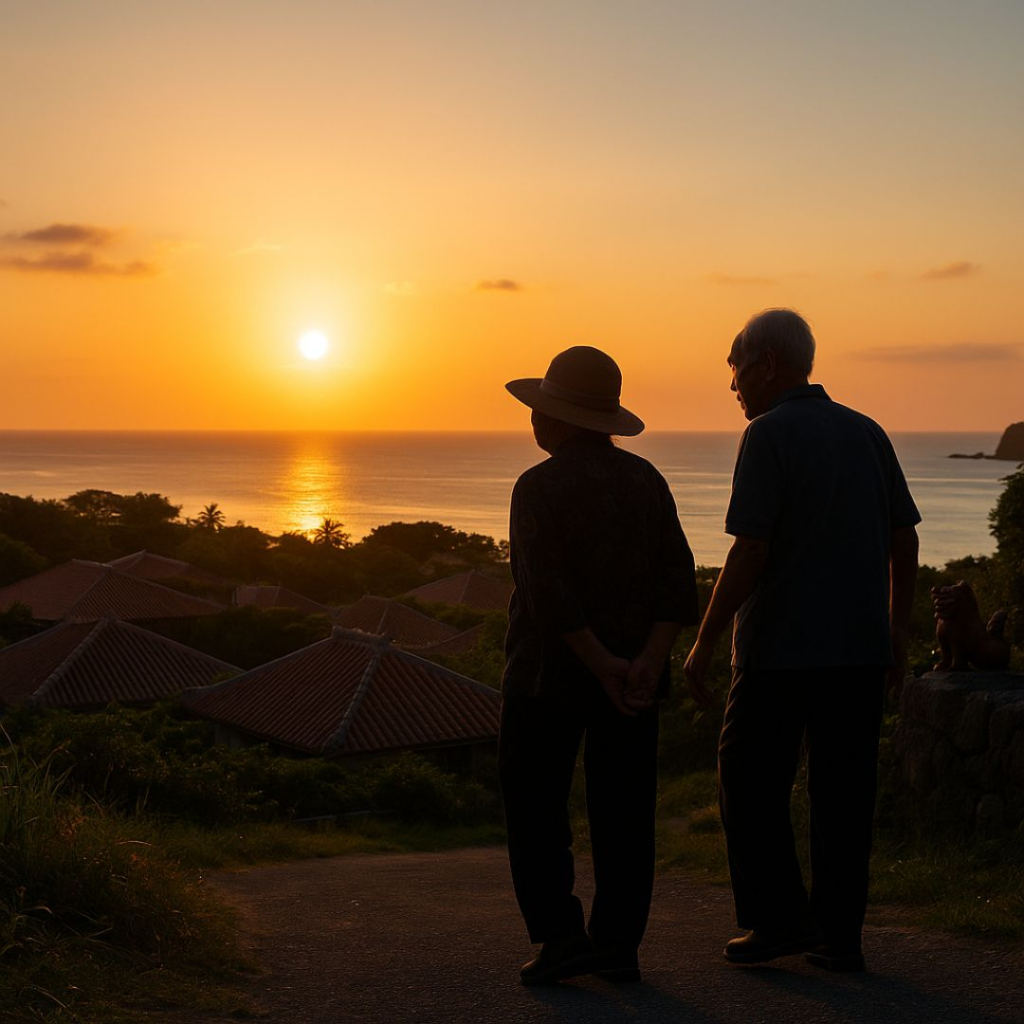
Once Japan’s symbol of extraordinary longevity, Okinawa now tells a more complex story.
Japan now counts more than 95,000 centenarians (people aged 100 and above), the largest number in the world. Okinawa, once Japan’s best-known “Blue Zone,” was long celebrated for its unusually high share of people reaching 100. Today, prefectures such as Shimane and Kōchi report higher rates per capita, partly due to shrinking populations. Yet Okinawa remains the most studied case of how daily habits extend life, and how quickly those gains disappear once traditional routines give way to modern ones.
Researchers have highlighted five habits that explain Okinawa’s longevity:
- Plant-heavy meals built on sweet potatoes, tofu, and fish
- Movement woven naturally into daily routines
- Moai, small groups offering lifelong social ties
- Ikigai, a clear sense of purpose
- Genes play a role, but lifestyle makes the difference
Eating For Longevity
The Okinawan diet is built around vegetables, soy foods, and small portions of fish, with sweet potatoes as the main staple. Red meat, sugar, and dairy are eaten only in small amounts. A cultural practice called hara hachi bu, stopping at about 80% full, helps prevent regular overeating. Compared with modern diets filled with processed foods, the difference is clear. Research, including the Okinawan Diet Study, shows that ultra-processed foods drive weight gain and disease risk far beyond calorie count alone.

Movement As A Way Of Life
Longevity in Okinawa is not tied to gyms or extreme workouts. People garden, walk, and perform daily chores that keep muscles and joints active. Even the practice of sitting on the floor requires regular standing and bending, adding natural mobility. The result is steady movement that helps people stay healthy into old age.
Moai: Small Circles, Strong Ties
A moai is a lifelong circle of friends who commit to supporting each other socially and financially. This reduces loneliness and provides security in difficult times. A large study of more than 300,000 people found that strong social ties lower the risk of depression, heart disease, and early death. In Okinawa, the tradition means no one grows old alone.
Ikigai: A Reason To Live Each Day
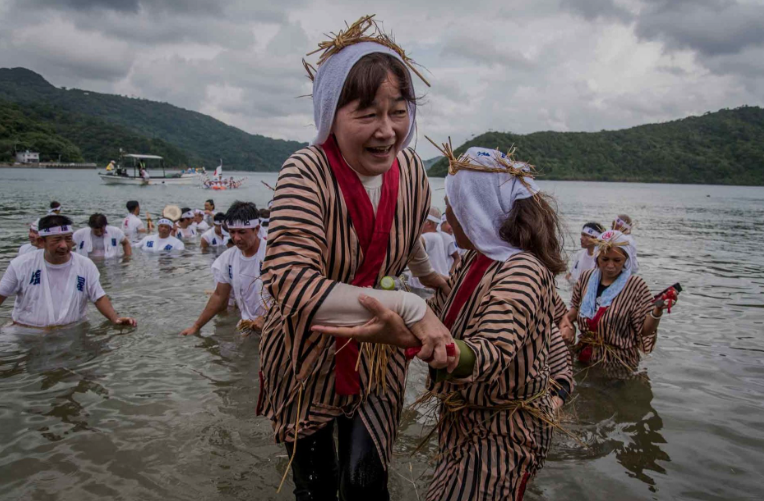
Purpose is central to Okinawan life. People often describe their ikigai as a role, passion, or duty that makes life worth living. It can be tending a garden, caring for grandchildren, or maintaining a craft. Having this sense of direction helps people handle stress and stay resilient. Many modern societies, in contrast, face growing disconnection and loss of meaning, as explored in our piece on happiness and purpose.
Why Habits Outweigh Genes
Genetics play a role in Okinawa’s longevity, but findings from the long-running Okinawa Centenarian Study show that the advantage is quickly lost when younger generations adopt Western diets and inactive routines. This makes it clear what matters most: habits. Lifestyle decisions about food, movement, and community are the strongest drivers of a long life. For more practical strategies that extend both lifespan and healthspan, see our guide on science-based habits.
Okinawa Wisdom: “At 70 you are only a child. At 80 you are merely a youth. At 90, if your ancestors invite you into heaven, tell them to wait until you are 100 — and then you might consider it.”
Turn Okinawan wisdom into a daily system. Fit & Free shows you how.