



This piece looks at why modern life often feels emptier despite higher living standards. It contrasts cultural mirrors from the late 1990s with today’s data, then narrows in on levers that reliably raise well-being.
- The mirror: what Happiness (1998) and Ted Kaczynski’s manifesto (1995) said about modern life
- The data: what the World Happiness Report (2025) shows now
- The fix: practical levers that raise real well-being
Happiness Without Illusions
Well before algorithms shaped our lives, there were already warnings about how easily happiness slips away. The late 1990s film Happiness showed ordinary lives that looked stable but felt empty. People chased comfort and validation and ended up alone anyway. Around that period, Ted Kaczynski’s manifesto argued that technology erodes freedom by prioritizing efficiency over human fulfillment. That criticism now reads less fringe than it once did. All of this predates smartphones and social feeds, and the distance they identified has only grown.
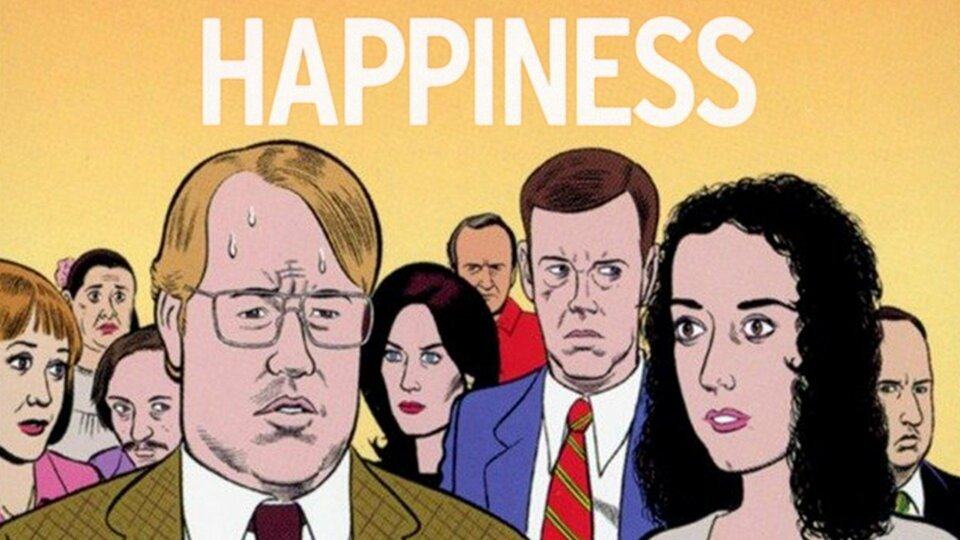
Poster of the 1998 film Happiness
Two Generational Realities
Many older adults remember slower news, deeper conversations, and privacy that didn’t need settings. Many younger people were born inside the always online world. Platforms and comparison feel normal. This split fuels tension about meaning, identity, work, and mental health. One side compares now with a before. The other has no before.
What the Global Data Says
The World Happiness Report is based on large samples across more than 140 countries, using a simple scale from zero to ten to measure life satisfaction. Across regions, the same six factors keep appearing: income, health, social support, freedom, generosity, and low corruption. Once a basic standard of living is secured, trust and support weigh as heavily as income. In much of the West, younger people report lower satisfaction than older generations.
A concrete pattern stands out. Nordic countries remain near the top, even during economic pressure, supported by strong trust in institutions and in each other, reliable safety nets, and high perceived freedom. In contrast, happiness among the young in parts of North America and Western Europe trends lower than older groups.
Demographics complicate the picture. Aging societies and declining birth rates push up costs in pensions, health care, and labor markets. Yet the pressures behind declining well-being are not just economic. They show up in daily life, in how people compete for income, attention, and a sense of belonging.
The System Promise and Its Price

Market systems improve living standards and expand choice, but they also fuel a status chase that never ends. Whether capitalist, socialist, or communist, instability at the top tends to spill down. Public finances are already under strain, with U.S. government debt now over 38 trillion dollars. The pressure passes down at the household level, where consumer debt has reached record highs.
The same competitive logic shows up in personal life. Dating apps and curated images raise expectations, shorten relationships, and weaken trust. Career climbing follows the same arc, with long hours and constant repositioning pushing aside friendships and shared time. When expectations drift away from reality, satisfaction declines even as incomes increase.
How Technology Quietly Reduces Our Freedom
Algorithmic decision-making is no longer confined to screens; it is starting to shape policy. In the United States, the widely publicized Big Beautiful Bill carried a lesser known clause that would have blocked states from passing new AI rules for ten years. The Senate rejected it, but the attempt showed the direction. Meanwhile, private AI platforms like Palantir are becoming part of the machinery of government.

Donald Trump with Peter Thiel, co-founder of Palantir
Control also flows through daily use. Tools such as ChatGPT and recommendation engines guide what people read, watch, and share. Filter bubbles narrow perspective and strengthen bias. Reliance on instant answers undermines slower reasoning and critical thought. Social media adds to this by training attention on short, rapid, dopamine-driven stimuli and keeping users in a reactive state. Platforms optimize for engagement, not depth, and over time this shifts how people use their time and direct their focus.
Levers That Actually Raise Happiness
Data and practice meet here. Sleep restores mood, judgment, and long-term health. Strength training and daily movement boost energy and lower disease risk. Whole foods stabilizes blood sugar and smooths anxiety spikes. Breath work and quiet time preserve focus in a constant stream of noise. Meaningful work and clean financial systems reduce stress. Strong friendships improve health and lengthen life. These are factors you can control, and control compounds. For evidence-based routines, see five science based habits that add years.
A Positive Ending
Fit & Free is a practical answer. It installs structure across four pillars: body, mind, money, and autonomy. Early chapters cover sleep, food, strength, systems, calm, and inputs, with steps that hold up even when motivation fades. Later sections focus on earning clean, building financial foundations, avoiding common traps, and restoring choice. It replaces default habits with a daily system that protects attention, steadies confidence, and turns steady effort into results that last.
Continue exploring how modern life is changing our body and mind:
- A Response to the ‘Maxxing’ Culture
- The Online Gambling Pandemic
- The Decline of Men’s Testosterone: Data, Drivers, and Fixes
- How Hyper-Individualism Made Us Forget Each Other
- The $9 Trillion Wellness Economy
Happiness grows where structure lives.