


We are heading into a period of decline, and the key is to prepare for what comes next.
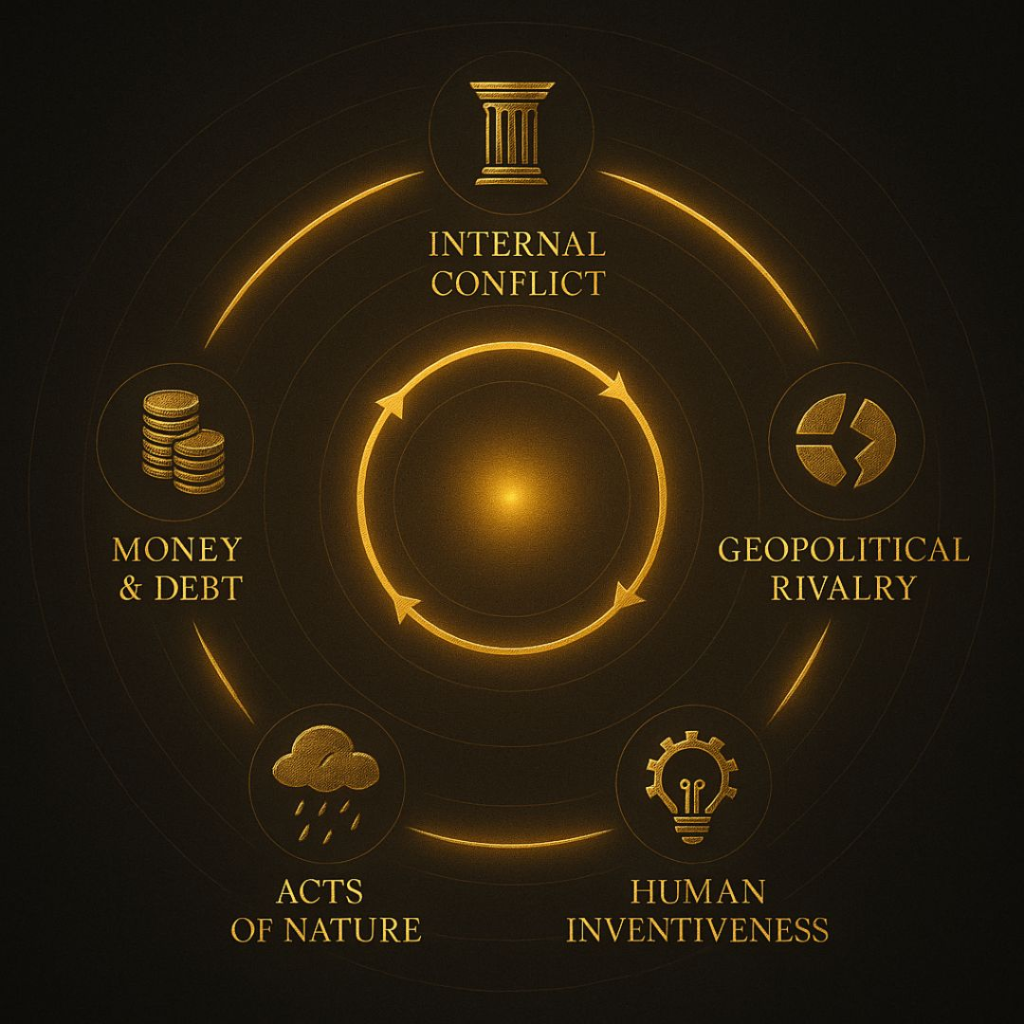
We recently examined the balance among today’s leading powers: the United States, China, and Russia. To understand where that rivalry may lead, it helps to look at the deeper patterns behind the rise and fall of nations. Ray Dalio, founder of Bridgewater Associates, argues that history moves in long cycles. After studying several centuries of economic and political shifts, he identifies five forces that repeatedly impact those turning points.
- Cycles repeat: Leading powers often follow 80–100 year arcs shaped by debt, conflict, and innovation
- Current risks: The US faces high debt, political division, and declining trust in institutions
- Key takeaway: Individuals should focus on earning, saving, investing, and staying adaptable
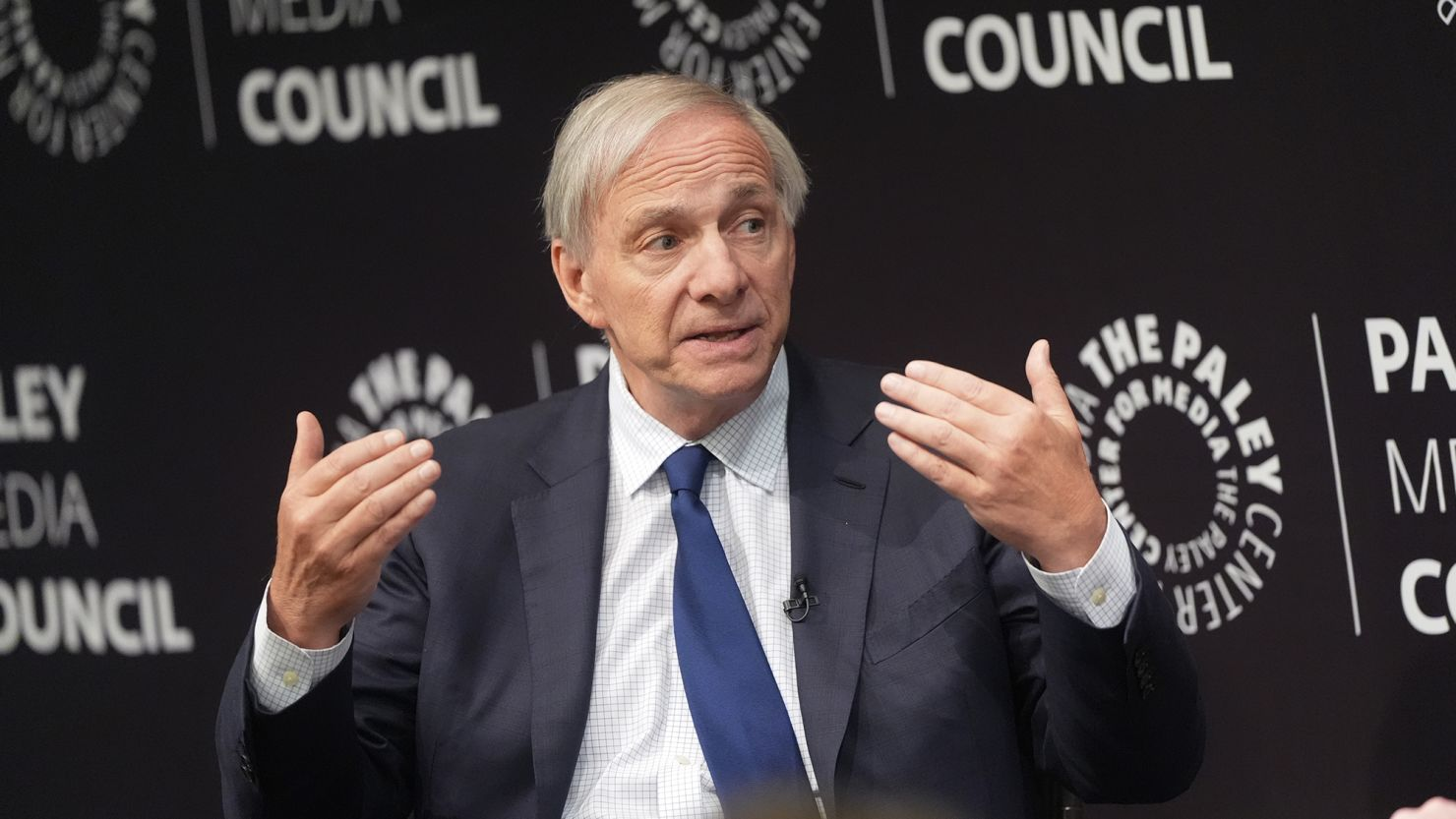
Ray Dalio speaks during a Paley Media Council event, 2025. Photo: The Paley Center for Media
The Five Forces That Drive History
In interviews and public talks, Dalio explains that the rise and decline of nations can largely be traced to five recurring forces.
The first is the money and debt cycle. When borrowing is easy and credit expands, economies grow quickly. Over time, however, debt can outpace income. When repayments become too heavy, financial stress follows. Central banks, which control interest rates and money supply, sit at the center of this process.
The second force is internal conflict. When inequality widens and trust in institutions falls, societies become divided. Political polarization makes long-term planning harder and weakens national cohesion.
The third is geopolitical rivalry. When a rising power challenges an established one, tensions increase. Trade disputes, technology bans, and military competition often follow.
The fourth force consists of acts of nature, such as pandemics or climate-related disasters, which can disrupt economies and expose structural weaknesses.
The fifth is human inventiveness. New technologies raise productivity and living standards, but they also shift power balances. As Dalio puts it, “the winner of the technology race often gains the advantage in both economics and geopolitics.”
Where We Are Now
| Empire | Period of Rise | Period of Decline |
|---|---|---|
| Dutch | 1600s | early 1700s |
| British | 1700s to 1800s | mid 1900s |
| United States | early to mid 1900s | visible signs today |
Dalio believes the United States shows signs typical of a late-cycle power. Public debt has reached historically high levels. Political divisions are deep. Trust in institutions has declined. He also points to weaknesses in education outcomes, arguing that a less productive workforce limits long-term growth.
This moment comes roughly 80 years after World War II, when the Bretton Woods system established the US dollar as the world’s primary reserve currency. In Dalio’s framework, such systems have lifespans. Over time, financial dominance can erode as new competitors rise. We see this in discussions around BRICS versus the G7 and in the development of alternative cross-border payment systems.
Technology and the Power Shift
Technology has always played a decisive role in history. The printing press spread ideas across Europe. Steam engines powered industrial expansion. Nuclear technology altered military strategy. Today, artificial intelligence and advanced semiconductors sit at the center of competition. The US–China tech race reflects more than commercial rivalry; it reflects a struggle over future influence.
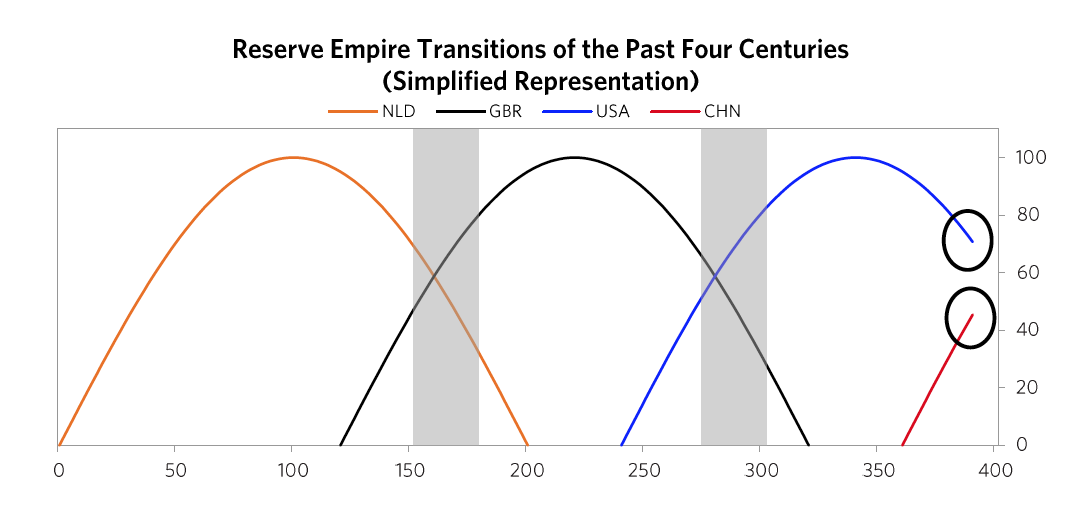
Historical cycles of reserve empires: Dutch and British decline, US nearing decline, and China’s rise
What Individuals Can Do
Dalio emphasizes that individuals cannot control global cycles. What we can control is preparation. His advice is to build financial resilience by earning consistently, saving a portion of income, and investing with discipline.
He also stresses flexibility. One proverb he often quotes says that a smart rabbit has three holes. The meaning is simple: avoid relying on a single source of income, a single location, or a single asset class. Diversification reduces vulnerability.
Finally, Dalio reminds audiences that wealth alone does not define success. Meaningful work, strong relationships, and personal growth matter just as much. Research consistently shows that once basic needs are met, purpose and connection drive long-term well-being. For a deeper reflection on this theme, see why modern life often feels empty.
“Pain plus reflection equals progress.” — Ray Dalio
The tools are clear. Fit & Free shows you how to apply them in daily life.