


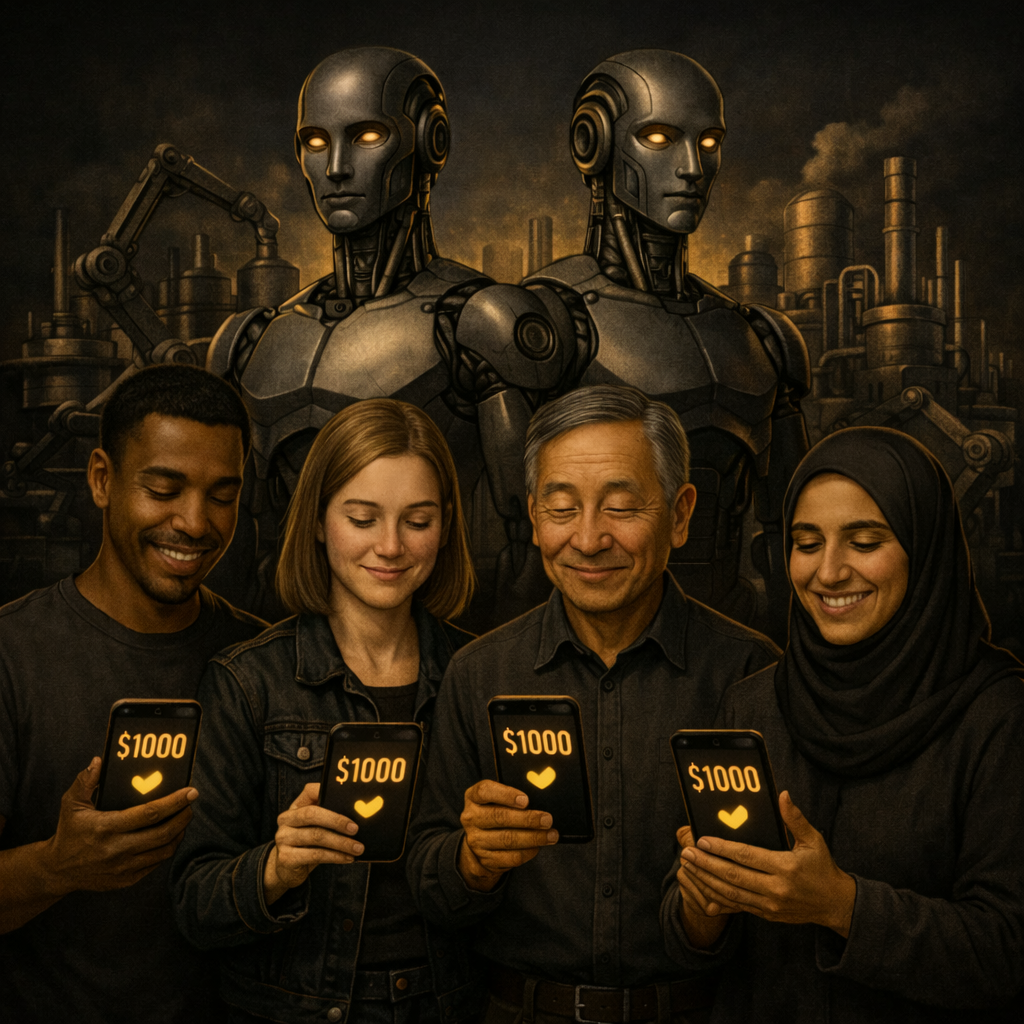
The next industrial revolution may not just change how we work. It could change who gets to work at all.
Universal Basic Income keeps returning to the conversation whenever technology starts replacing people faster than new jobs appear. With AI now writing reports, generating code, handling customer support, and moving into white-collar roles, the question feels less abstract than it did a few years ago. This piece looks at where the idea came from, how it could realistically be funded, what recent trials actually showed, and whether UBI would solve the problem it is meant to address.
Blue-collar work generally refers to physical or manual jobs, such as construction, manufacturing, transport, or maintenance. White-collar work refers to office-based or professional roles, including administration, finance, design, programming, and other knowledge-based work.
From Industrial Revolutions to Basic Income
The first industrial revolution, beginning in the late 18th century, replaced much of agricultural and manual work with machines powered by steam. Large numbers of people moved from rural areas into factories. Work did not disappear, but it changed faster than many workers could adapt.
The second industrial revolution, driven by electricity and mass production in the late 19th and early 20th centuries, increased productivity again. Factory work expanded, but traditional crafts and smaller local industries declined.
The third industrial revolution began in the 1970s with computers and the internet. Many physically demanding jobs disappeared, but new roles emerged in services, administration, and technology. This is where the distinction between “blue-collar” and “white-collar” work became more visible.
The current phase, often called the Fourth Industrial Revolution, is different because automation is moving into both categories at once. Robots continue to replace physical labor, while AI systems increasingly handle cognitive tasks that once required education and experience. That overlap is what brought Universal Basic Income back into serious discussion.
As Elon Musk put it at the World Government Summit in 2017: “What to do about mass unemployment? I think, ultimately, we’ll have to have some kind of universal basic income.”
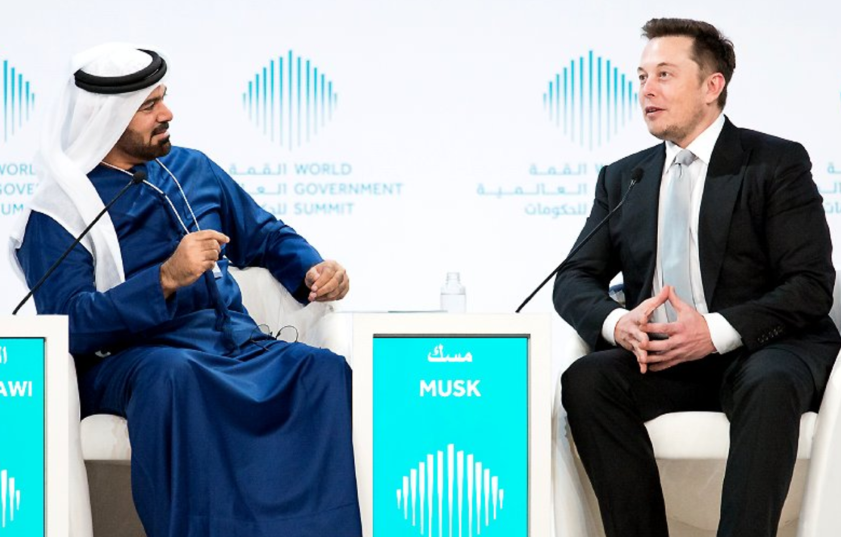
Elon Musk at the World Government Summit in Dubai, 2017
Models and Funding Ideas
The closest real-world example often mentioned is the Alaska Permanent Fund, which distributes part of the state’s oil revenue directly to residents. It works because the income comes from a shared natural resource. Replicating that model elsewhere is harder. Most countries do not have an equivalent revenue source.
More recent proposals focus on technology. The argument is simple: if automation increases productivity while reducing labour demand, part of that gain could be redistributed. Ideas range from taxing large technology firms to creating sovereign funds built around AI-generated profits. The difficulty is scale. A meaningful basic income requires stable funding over decades, not temporary windfalls.
The Concentration Risk
A basic income does not exist in isolation. The surrounding economy determines who ultimately benefits. If payments are mostly spent on rent, subscriptions, and large corporate services, money quickly flows upward again. The income stabilizes consumption but does little to change underlying ownership.
Funding matters just as much. When income increases without matching productivity, prices tend to follow. The inflation cycle after pandemic stimulus payments showed how quickly purchasing power can erode when money enters the system faster than supply expands.
Lessons from Pilots and Stimulus
UBI trials over the past decade produced mixed results, which is probably what should be expected. Financial stress decreased. Mental health improved. Some participants used the extra stability to change jobs or pursue education. Others simply worked less.
The Stockton, California pilot, which provided 125 residents with $500 per month for two years, reported better financial stability and wellbeing, while also showing reduced working hours among some recipients.
Extra time is not automatically negative. Many people used it productively. Still, work provides structure and social connection as much as income. Removing one without replacing the other changes more than just finances, as we explored here.
Pandemic stimulus payments offered a larger real-world example. Lower-income households covered essentials, middle-income households reduced debt, and wealthier households invested. Asset prices rose sharply, and inflation followed. The distribution effects were clear.
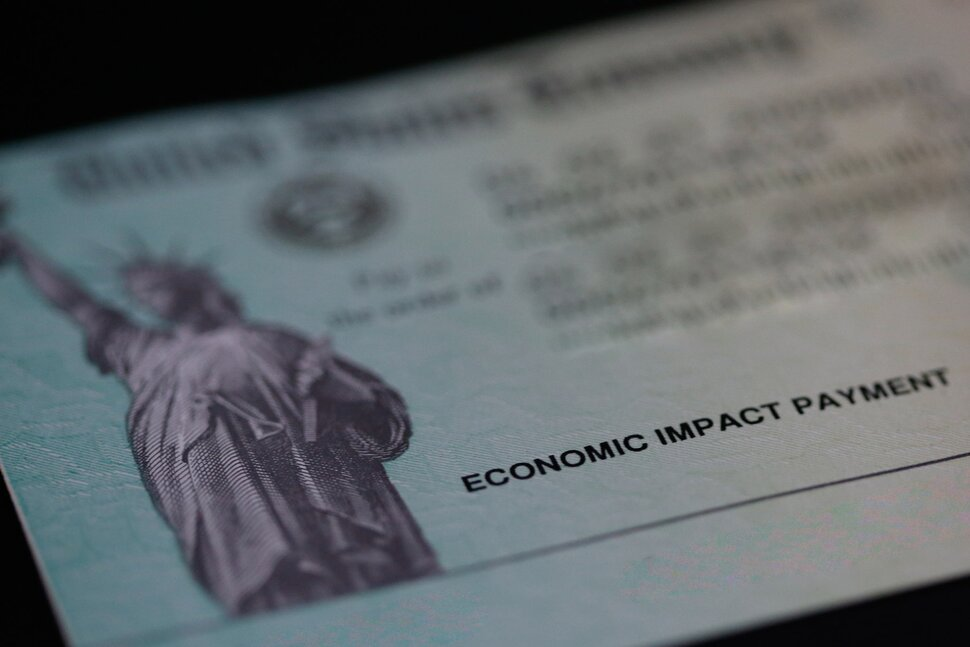
U.S. stimulus check labeled Economic Impact Payment (Getty Images)
Will It Be Needed?
Technology has repeatedly removed jobs while creating new ones. There is no guarantee this time will be different, but there is also no guarantee the transition will be smooth. Some people adapt quickly. Others do not. That gap is where political pressure for solutions like UBI emerges.
UBI may end up functioning less as a permanent system and more as a buffer during periods of rapid change. A way to reduce instability while new forms of work and education catch up.
A Wider Lens on Autonomy
Whether basic income arrives or not, the underlying issue remains the same: autonomy. The ability to maintain control over time, skills, and income in a system that keeps shifting. Building personal resilience through health, financial independence, and adaptable skills offers protection from both automation shocks and policy shifts. Fit & Free approaches this from four angles (body, mind, money, and autonomy), offering practical steps to secure well-being without relying on any single system.
Explore more related deep dives on finance, freedom, and power:
- Shift Toward a Technocracy
- Governance of Truth
- The Power Behind Silicon Valley
- How the Rothschilds Enabled Modern Finance
Security comes from what you build, not what you are given.